Natural dyes help Beijing-based designer revive an ancient Chinese textile technique
- Tea silk has largely fallen out of use in China. It gets its deep reddish-brown colour from a dye made from a yam native to Guangdong province
- Designer Kathrin von Rechenberg has been using the labour-intensive fabric to craft contemporary Chinese-inspired garments

Traditional Chinese clothing has inspired many designers, but all too often things can veer into tacky costume-drama territory. Kathrin von Rechenberg’s eponymous label, however, avoids obvious chinoiserie while celebrating traditional Chinese textiles and silhouettes through her unique, contemporary creations.
Rechenberg’s evening wear flows like robes from the Han dynasty, while her office-ready jackets and blouses are more structured. There’s even a growing menswear collection that translates traditional Han styles into modern-day couture.
Earthy tones, with splashes of yellow and blue, dominate the label’s Beijing-based studio, thanks to the designer’s signature use of tea silk. One side of the material is a vibrant shade of reddish-brown; the other, a contrasting black.
It is this duality that inspires Rechenberg. “I really can never decide which side is more beautiful,” she says, with a laugh.
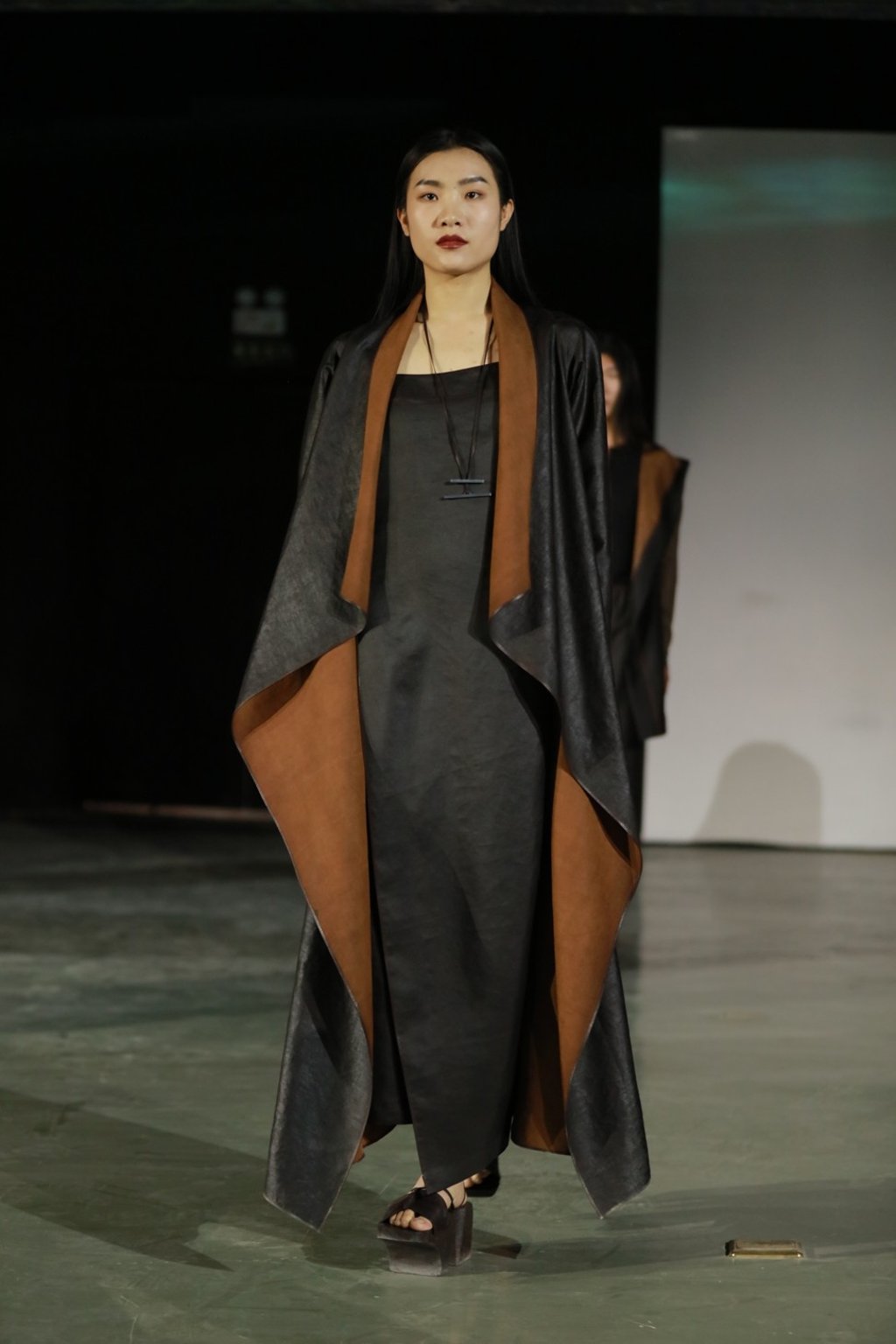
Initially introduced to the fabric by a Taiwanese designer, Rechenberg kept coming across tea silk in textile markets from Hong Kong to Beijing. She eventually tracked down the source to the city of Shunde, in China’s southern Guangdong province. Although tea silk had largely fallen out of use in China, there was a healthy export market to Japan and South Korea.