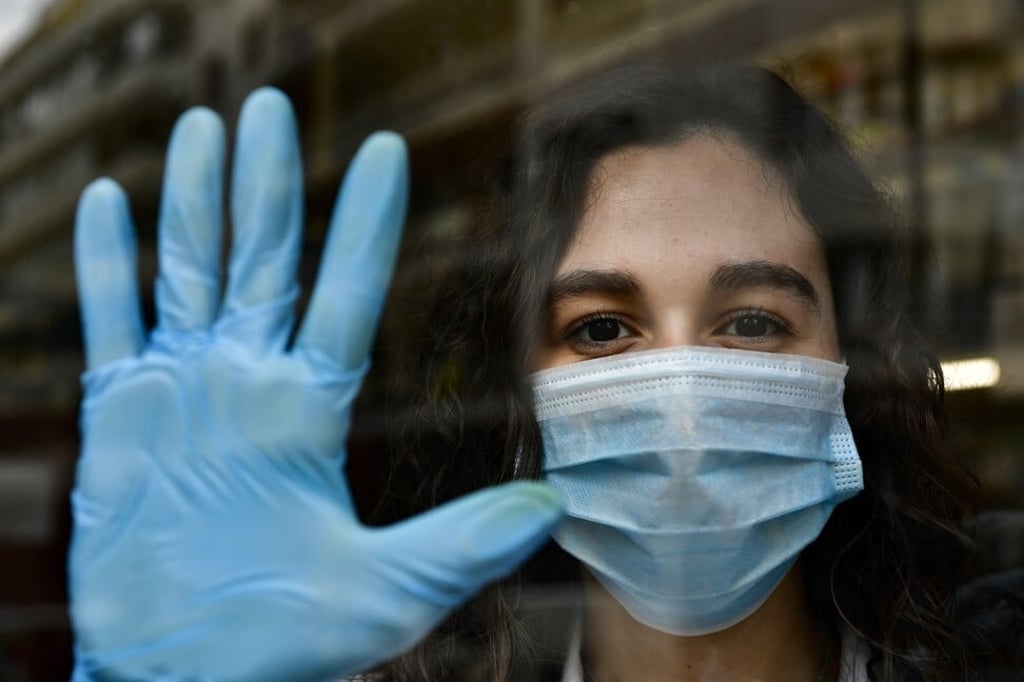
‘We’re dogs without tails’: how face masks affect human interaction – and what to do about it
- Half our face is hidden when we put a mask on and we lose many of the non-verbal cues we use to tell what a person is feeling or thinking
- One way to avoid confusion is to take time to ask people for clarification; it’ll slow down communications, but that could be a good thing

Smile, they say, and the world smiles with you. Unless you’re wearing a mask. Then the world can’t see your smile, much less smile back.
With it has come a removal of crucial visual cues that people have used for millennia to communicate, understand each other and negotiate space in the public arena.
“Our minds light on the face like butterflies on a flower, for it gives us a priceless flow of information,” Daniel McNeill wrote in The Face, his 1998 book on its significance throughout human history.
Here’s a partial inventory of the information that’s lost when a mask is put on. Smiles. Frowns. Lip movements. Crinkle lines at the mouth’s edge. Cheek twitches that indicate approval or disapproval. Reflexive gestures that collaborate with the eyes to say: hey, I mean no harm. Or: hey – back off.