Advertisement
Fashion
LifestyleFashion & Beauty

Explainer | How Chinese professional shoppers, or daigou, operate – by buying luxury goods for less overseas and shipping them for customers in China

  • Professional shoppers make luxury goods affordable for Chinese consumers by buying them abroad for less than they cost in China. Dodging taxes keeps costs down
  • Some are sole traders, and have been hit hard by travel curbs and a drop in flights amid the pandemic; others operate businesses in league with duty-free stores

Reading Time:3 minutes
Why you can trust SCMP
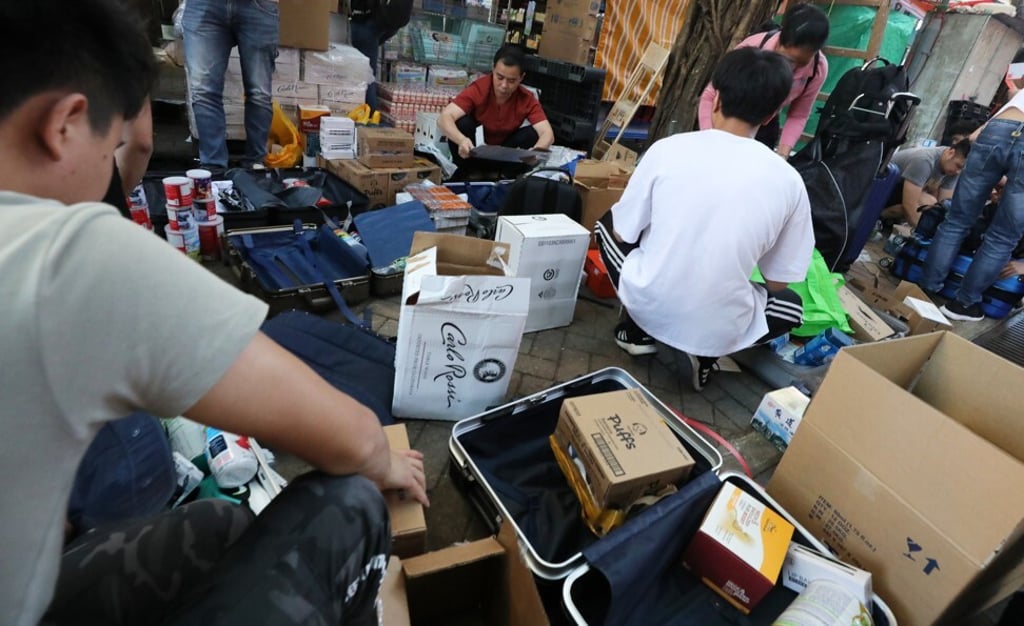
Daigou, or professional shoppers, like these in Sheung Shui, a town in Hong Kong near the Chinese border, buy goods overseas for Chinese consumers and offer low prices by dodging import taxes. Photo: Felix Wong
Cheryl Heng
A La Mer face cream costs 2,680 yuan (US$390) in retail stores in China but, according to a report from equity broker Bernstein, only 1,600 yuan if one enlists the services of a professional shopper, or daigou. For years these buyers have provided Chinese consumers with luxury goods at affordable prices, but they have been hit hard in recent months by the Covid-19 pandemic.

What is a daigou?

The term daigou means “buying on behalf of” in Chinese. It is used to describe professional shoppers who buy sought-after products overseas and resell them in China. Cosmetics, apparel and luxury goods are the most popular goods.
These buyers operate via messaging apps like WeChat, through which they build a network of customers and where they sell through their newsfeeds. Some establish e-commerce stores on Alibaba-run Taobao, a Chinese shopping website – live-streaming to promote their products – or on websites such as ymatou.com and smzdm.com which resell products from overseas. (Alibaba Group is the owner of the South China Morning Post.)
Daigou buy sought-after products overseas and resell them in China. Photo: Felix Wong
Advertisement

“Over the past decade, this grey channel has provided Chinese consumers with valuable access to global brands at affordable prices,” says the Bernstein report. “At the same time, daigou operators can make lucrative margins by [taking advantage of variation in] prices between domestic and overseas markets.”

At its peak in 2013, the daigou economy was worth 74.4 billion yuan. It had shrunk to 40 billion yuan by 2015 because of clampdowns by the Chinese government on the activities of the professional shoppers.

What types of daigou are there?

Daigou business is conducted both by sole traders and through companies. The sole traders are small-time buyers who live overseas or who go abroad frequently on buying trips. Some work with travel agencies, which give them discounts at designated duty-free stores to which they are introduced by the agency.

Advertisement
Select Voice
Choose your listening speed
Get through articles 2x faster
1.25x
250 WPM
Slow
Average
Fast
1.25x