Henna’s place at the centre of wedding festivities in South Asia and the Middle East: what the ritual painting of hands and feet symbolises
- Henna tattoos, known as mehndi, are a wedding tradition that may have originated in ancient India, and are popular across the Middle East and North Africa
- The henna artists who apply the red paste made from grinding the dried leaves of a plant are highly sought after and some have become social media stars

The popularity of henna, or mehndi as it is known in the Indian subcontinent, across the Middle East, North Africa and South Asia is a beautiful example of the shared heritage and commingling of cultural practices across a vast region.
A form of body art practised since antiquity, henna is traditionally worn for festive occasions and weddings, and is seen as the harbinger of joy and fortune. Its reddish-brown colour is considered auspicious, thought to carry barakah – Arabic for blessings – and symbolises the prosperity a bride is expected to bring to her new family.
Henna body art has also evolved into a fashion accessory. It is fun, appealing, temporary and pain-free, a natural alternative to a permanent inking. Henna tattoos, as they have come to be known, are immensely popular all over the world. College girls sport henna as a fashion statement and children have the tattoos painted on them at birthday parties.
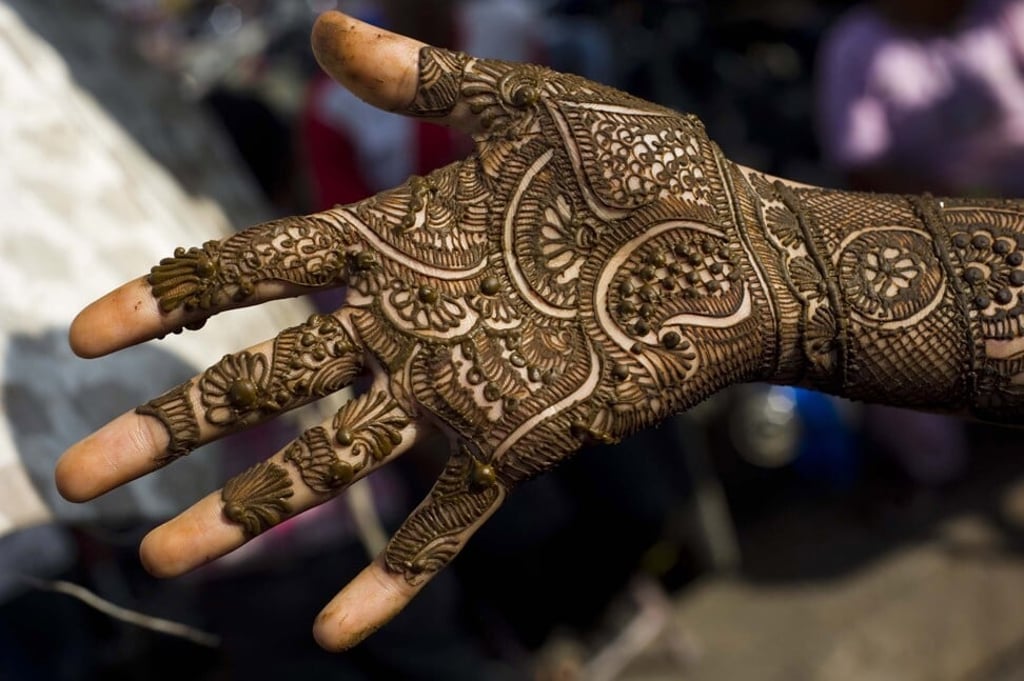
Henna takes centre stage at bridal mehndi ceremonies. Intricate patterns of floral and paisley motifs in rich hues of red, ranging from burgundy to bright orange, are delicately drawn on the hands of the bride. Her feet are decorated with designs featuring vines that twirl up around the ankles up to the knees. Women and children take turns to have mehndi applied on their hands in a celebration that involves singing, dancing and feasting.
“The mehndi ceremony is the start of the wedding festivities,” says Sangeeta Bajaj, 55, an Indian living in New York who organised her son’s wedding in Udaipur, Rajasthan, in 2019.