Advertisement
The qipao, or cheongsam, makes a comeback in Shanghai, where tailors target young women to keep a tradition alive
- Tailors in Shanghai hope to subvert stereotypes of the qipao, or cheongsam, and see targeting the young as a way to keep alive the figure-hugging Chinese dress
- The qipao helped to break down gender norms for women during the 1920s, says a tailor. ‘The sense of freedom associated with that will never go out of style’
2-MIN READ2-MIN
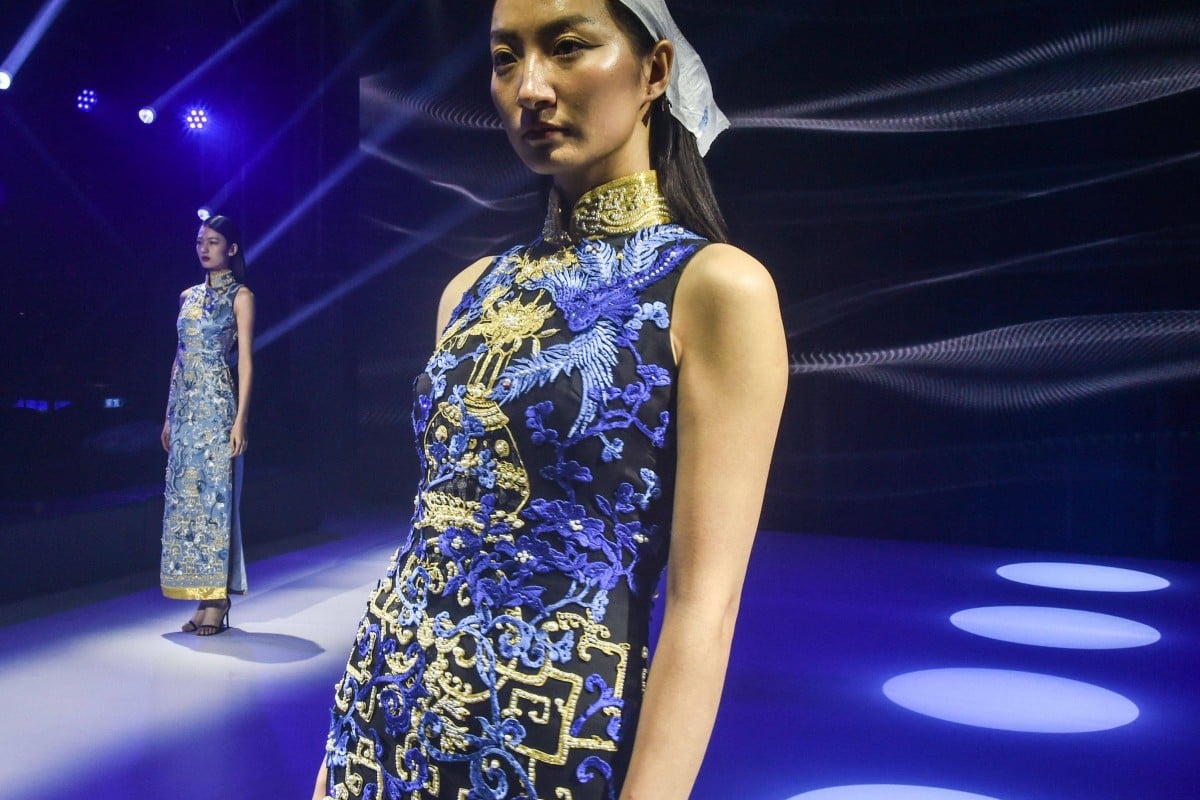
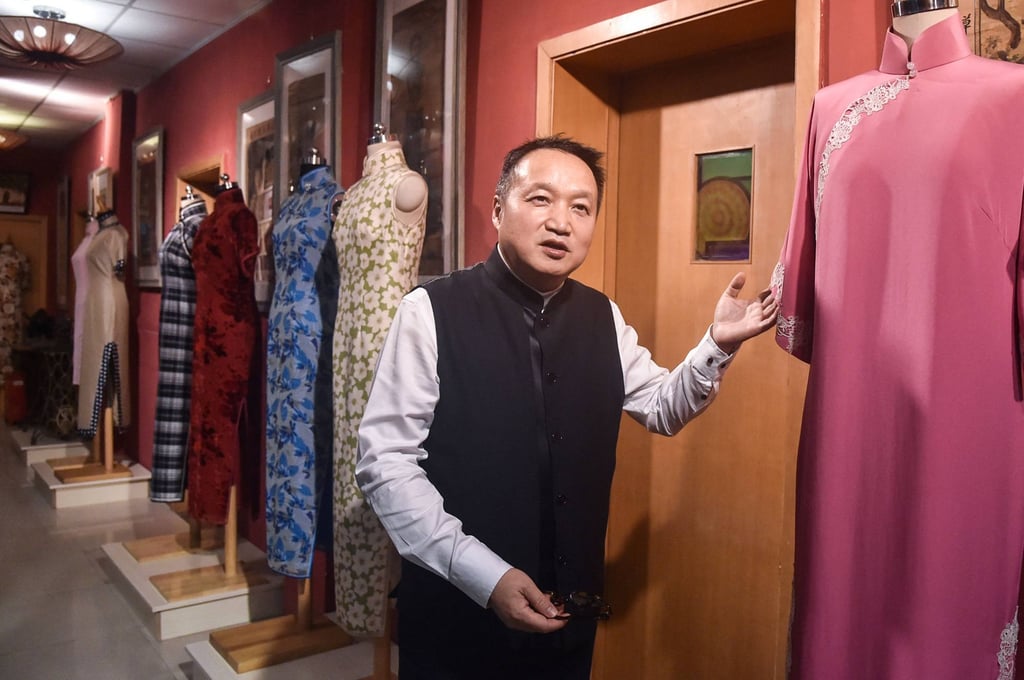
Zhou Zhuguang surveys his Shanghai workshop and rows of workers meticulously stitching high-collared Chinese dresses known as qipao, some of which sell for nearly US$5,000.
“It’s a highly skilled craft,” said Zhou, co-founder of Hanart, one of China’s most well-known qipao makers.
“Some of our tailors spend a lifetime learning to make qipao.”
Advertisement
Their price tag also reflects enduring demand for the qipao, known as cheongsam in Hong Kong and overseas Chinese communities.
Drawing on traditional design elements, the dress was popularised in 1920s Shanghai, its form-fitting cut capturing the glamour of that freewheeling pre-communist era and the desire of Chinese women to liberate themselves from traditionally subservient roles.
Advertisement
Advertisement
Select Voice
Select Speed
1.00x