Top five designers and trends at Seoul Fashion Week spring-summer 2018
This season saw the continuation of K-pop-inspired street style, tailored collections, the first black Korean model and other expressions of diversity

True to the spirit of K-fashion, Seoul Fashion Week spring/summer 2018 showcased many signature looks on the catwalks this season. From K-pop-influenced street styles to tailored suits and cutely feminine womenswear, South Korean designers gave audiences what they expected – and then some.
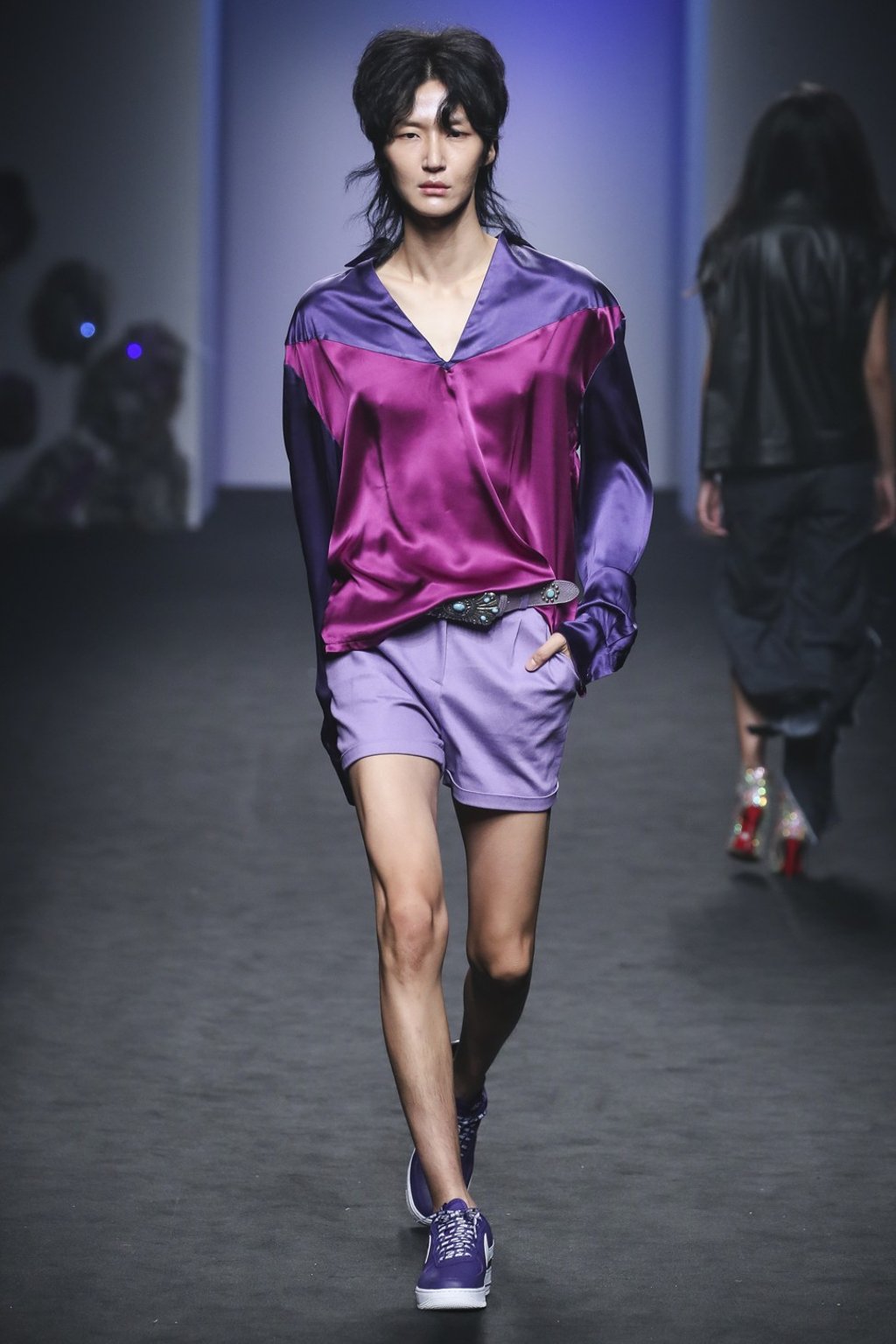
Continuations and new iterations of themes from past seasons such as androgyny, preppy Ivy League college looks and a play on surgical masks were seen at several shows. Korea’s youthful spirit, whether channelled through K-pop and street style aesthetics or the angst of punk-influenced collections, was also on high display.
Hong Kong millennials, fans of K-pop and soap operas, are big on Korean street fashion
This season notably saw the rise of “Blasian” (black Asian) Korean-Nigerian model Han Hyun-min, who was born and raised in Seoul. Until recently in South Korea, models have been mainly Korean or European. Han, who is often credited as “Korea’s first black model,” opened and closed many of the top shows this season alongside a few other black models.
South Korean men having plastic surgery to get ‘pretty boy’ looks and macho physiques of their K-pop and K-drama idols
Aside from homogeneity, South Korean society and media have often been criticised for perpetuating very high and narrow standards of beauty. In a nation where up to 20 per cent of women were cited to have undergone some form of cosmetic enhancement in 2015, Jung added that there’s been a shift towards natural looks and perhaps even imperfection on the runways – an indication of broadening attitudes towards beauty and diversity.