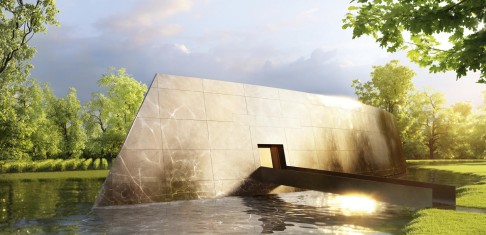
Bordeaux winemakers investing in well-designed cellars for better sales
Students of architecture might traditionally consider a pilgrimage to Florence, Dubai, Miami or Tokyo to study the best examples of their craft. Very few would think about visiting a vineyard - but if they did, it would almost certainly be Rioja, the site of an architectural boom in the 1990s and into the 2000s with names such as Frank Gehry, Santiago Calatrava and Zaha Hadid adding modernist touches among the Spanish vines. The first stirrings that a similar revolution might be happening in Bordeaux began about 10 years ago, most obviously with the big-name, high-profile chateaux across the Médoc and Saint Emilion. If there's an owner of a 1855 classified estate that hasn't called in the architects over the past decade, I'd like to meet them.

Students of architecture might traditionally consider a pilgrimage to Florence, Dubai, Miami or Tokyo to study the best examples of their craft. Very few would think about visiting a vineyard - but if they did, it would almost certainly be Rioja, the site of an architectural boom in the 1990s and into the 2000s with names such as Frank Gehry, Santiago Calatrava and Zaha Hadid adding modernist touches among the Spanish vines.
The first stirrings that a similar revolution might be happening in Bordeaux began about 10 years ago, most obviously with the big-name, high-profile chateaux across the Médoc and Saint Emilion. If there's an owner of a 1855 classified estate that hasn't called in the architects over the past decade, I'd like to meet them.
There is a direct connection between the recent investment in the cellars and the high prices vintners sought for the 2009 and 2010 vintages. Chateaux found themselves with full coffers and reinvested that money into the wine. It's a large part of the reason release prices for Bordeaux classified wines remain stubbornly high. The chateaux are fully aware that new cellar space bought with part of the additional money has brought greater consistency and levels of excellence to their wines, and they want that to translate to a "new normal" when it comes to pricing.
There hasn't been a building frenzy like this in Bordeaux since the 19th century, when the Médoc was seeing the construction of vast majestic chateaux designed to display the wealth and power of a new wave of owners who were arriving with cash from Paris, London and further afield. This was the era when some of the region's most iconic buildings went up, from the Renaissance spires of Chateau Pichon-Longueville to the Corinthian columns of Chateau Margaux. (It was just as much a tourist attraction when architect Louis Combes created it in 1815 as it is today.)
The difference is that while the focus in the 19th century was largely on the chateau buildings themselves, this time it is mainly the cellars that are receiving the lavish attention. There are exceptions: Chateau Pédesclaux in Pauillac just unveiled a startling addition by architect Jean-Michel Wilmotte in the form of two glass cubes that extend outwards from either side of the original 19th century limestone building, a kind of viticultural version of I.M. Pei's Louvre pyramid in Paris. Chateau Angelus (architect Jean-Pierre Errath) and Chateau Pavie (architect Alberto Pinto), both in Saint Emilion, have also entirely reworked their main buildings, spending between 20 million euros (HK$174.3 million) and 30 million euros apiece. The cellars, however, are where most of the action is today.
"The emphasis used to be on what was inside the bottle, but today an overall image of excellence is key," says Jean-Michel Cazes of Lynch-Bages. "Wine lovers want to visit their favourite estates, and journalists write about not only the taste but the processes behind making the wine. Inevitably, it has become important for wineries themselves to make an aesthetic impact."