Why French wrong to think wine in screw-cap bottles won't age well
Bordeaux winery explains decision to revert to corks by pointing to customers' view that screw caps are only fit for wine meant to be drunk young. Evidence suggests they are mistaken

It was a small news story; the end of a decade-long experiment into the screw-cap closure for André Lurton Pessac Léognans whites. But it came just weeks after I had done a horizontal tasting of 2005 wines of that particular style where one of the Lurton estates, Château Couhins-Lurton, stood out as exceptionally young and fresh - I think I wrote about the fresh aromas of billowing cotton sheets that made me look again at the vintage to check that they hadn't served up something younger. It turned out to be bottled under screw cap.
So the news that they are stopping using the closure seems crazy. The technical director for Lurton, Vincent Cruège, agreed with me that screw caps offer the best option for ageing white wines. And yet, Cruège tells me, in the Lurton cellars there are unsold screw cap whites for several past vintages, and none for the wines closed under cork. "Screw caps still have a difficult image in France, although technically we still believe in them. The French market will accept them for wines with a short turnaround time. The buyers simply don't want to take the time to explain to their end clients why they work for higher quality wines," Cruège says.
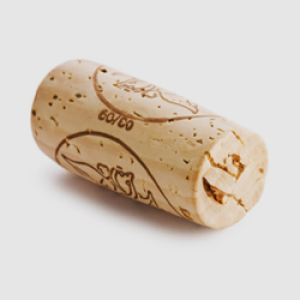
They feel confident that they have a good alternative in dense corks from Sardinia. But I wanted to understand more about the decision, so I asked to taste through a vertical of two of their best estates - Couhins-Lurton, and Château La Louvière. Both are in Pessac Léognan, just to the south of the city of Bordeaux, both making well-regarded red and white wines.
We tasted through the whites from 1985 for Couhins, and the reds from 2002 (the first vintage for this colour), and for La Louvière from 1982 whites and 1986 reds. Where possible, the screw cap version was placed against the cork - so from 2003, when the adoption of screw cap for whites was first introduced. We didn't taste every vintage, but more often than not the "lesser" years such as 1993, 2001 or 2004 to see how the estates performed when nature hadn't given them a free pass, as Cruège cleverly says. "It's the tough years where you see the terroir and the winemaking," he says.
I took two very interesting lessons from the tasting. The first is just how smart good white wine producers are at exerting a delicate touch with red wines when it counts. Two of the most recent difficult red years - 2011 and 2013 - tasted unusually luscious and easy drinking from La Louvière, with none of the green flavours that you can find in many reds from these years.
"In the cooler vintages where red grapes can have trouble ripening," Cruège says, " look for white wine producers when buying Bordeaux red. They are used to exerting a delicate hand and working on preserving aromatics without over-extraction of the skins - hugely important in challenging years."