One of Hong Kong’s last bamboo pole noodle makers shows how it’s done, as it always has been, at Sham Shui Po restaurant
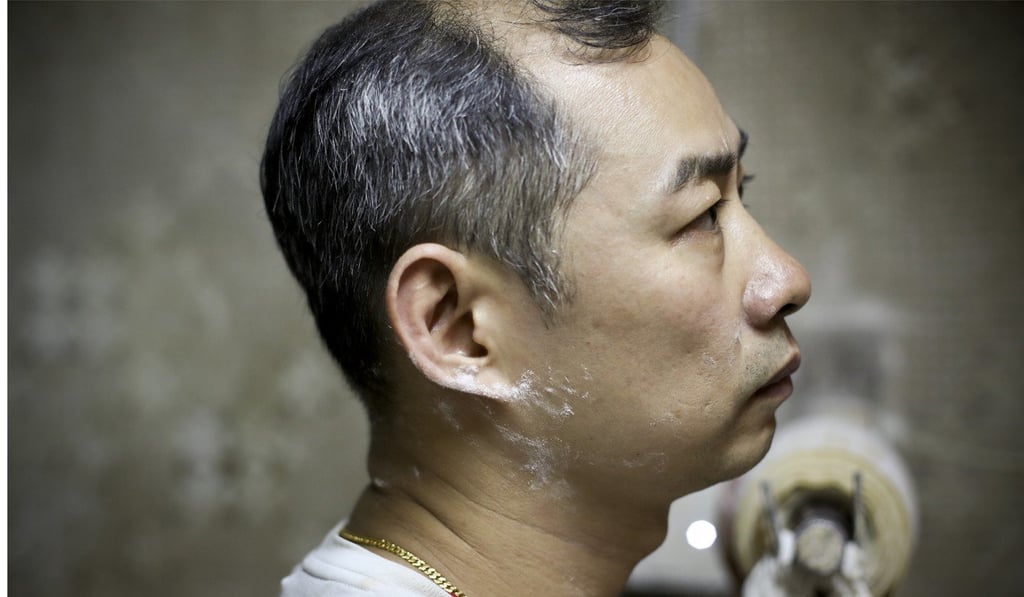
As a schoolboy Lau Sum Kee Noodle owner Lau Fat-cheong began helping on his father’s noodle stand and, to this day, he carries on the family tradition of rolling noodle dough by sitting on one end of a bamboo pole

Even though it’s 2pm, there’s a constant stream of people coming in and out of Lau Sum Kee, a restaurant in Hong Kong’s Sham Shui Po district. Its speciality is noodles made using a bamboo pole, which is why they are called jook sing noodles, or bamboo pole noodles.
There aren’t many restaurants in the city that make their own noodles from scratch, but Lau Fat-cheong, in his early 40s, and his two younger brothers make them this way as Lau Sum Kee has done since the business began operating more than 60 years ago in the working-class area in Kowloon.
“My grandfather was in Guangzhou when he started learning how to make noodles in the 1930s,” Lau says. “Then in the 1940s, together with my father, they had a roving noodle stall where they carried all their equipment on bamboo poles. After the war, they started up their itinerant noodle stand again.”
Boy, 8, makes 10,000 wontons a day to boost family income
In 1954 Lau’s father came to Hong Kong and went to work at his uncle’s noodle shop in Shau Kei Wan on Hong Kong Island. A few years later Lau’s father branched off on his own in Sham Shui Po and opened a cart noodle stand in Pei Ho Street that operated in the evenings.
When Lau’s parents got married, one would make the noodles, while the other would cook and serve them.
The authorities began gentrifying Pei Ho Street in 1975, and food cart owners had to get a cooked-food stall licence to keep their business going, which is what the Laus did. Twenty years later they finally moved into a shop space in Kweilin Street, and have since opened two more branches in Hong Kong.