Kebabs, baked eggs and savoury pastries: the Chinese Muslim food trail
Fat tail lamb but no pork, wheat noodles and breads baked in a pit oven – the food of the Hui and the Uygurs is deliciously different to the fare found in other provinces

There are 10 Muslim minorities in China, the main two being the Hui and Uygurs. The former are descendants of Arab and Persian traders who intermarried with Han Chinese and are barely distinguishable from other Chinese, apart from practising Islam and abiding by its dietary rules. The Uygurs are a Turkic people with their own Arabic-script language, dress and appearance – their features are more Caucasian than Chinese.
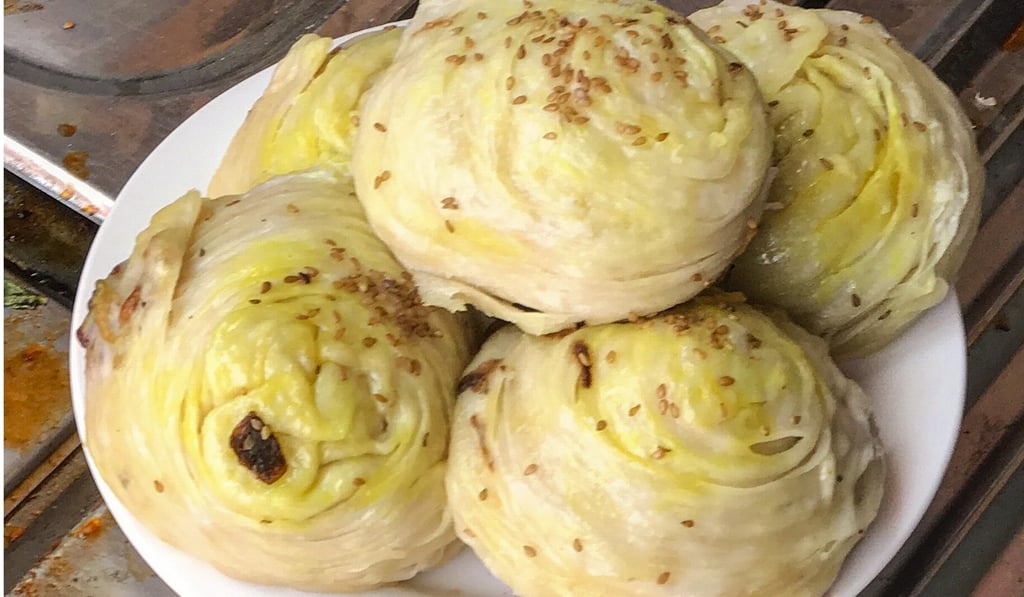
Their food is distinct from that of other Chinese regions, first and foremost because they don’t eat pork, which is forbidden in Islam. Instead, they favour fat tail lamb. They also use wheat to make their hand-pulled noodles (leghmen or laghman), dumplings (mantu) and steamed buns, and a range of savoury pastries (samsa) and breads that are baked in a tonur, or pit oven.
And instead of making plain steamed white rice, Uygurs turn it into a rich pilaf with carrots and peppers, to serve with boiled lamb.
I recently travelled to several cities to research the food of both Hui and Uygurs, starting in Beijing, before going southeast to Xian in Shaanxi, then northwest to Hotan, Turpan, Urumqi and Kashgar in Xinjiang.