What’s a Chinese-Mexican chef doing cooking Israeli food? It’s a Los Angeles thing
- Hong Kong-born Alex Chang went from cooking in an illegal kitchen in his college dorm room to one of Los Angeles’ most influential restaurants, Animal
- His Asian tweaks to otherwise traditional dishes have taken notoriously complex Israeli cuisine to a new level in the city

The first time I met Alex Chang was over Korean barbecue at the Los Angeles hotspot Park’s BBQ. The chef brought along a bottle of biodynamic red wine and we passed the meal discussing the favourite topic of all LA chefs: California’s superlative produce. Then there was Chang’s particular passion: Israeli food.
It was apparent that Chang represents what has made Los Angeles among the most exciting food cities in the world. He is a young Chinese-Mexican chef, born in Hong Kong, who gained notoriety cooking out of an illegal kitchen in his dorm room at the University of Southern California (USC). Just 29 years old, he has already cooked in kitchens from Mexico City to Belgium, and now cooks one of the world’s most personal, complex, and historically fraught cuisines for some of its most sophisticated diners.
Chang was born in Hong Kong to a Chinese father who grew up in Japan and a Mexican mother raised in Los Angeles. His first memories, though, are of New Jersey, where he lived until he was 12. When his father accepted a job that would take him to Tokyo, his mother decided instead to take him back to Southern California where her large family, including seven siblings, lived.
“So instead of going to Japan, we moved to Santa Barbara,” says Chang. “I lived there until I was 18, and then moved to LA for college.”
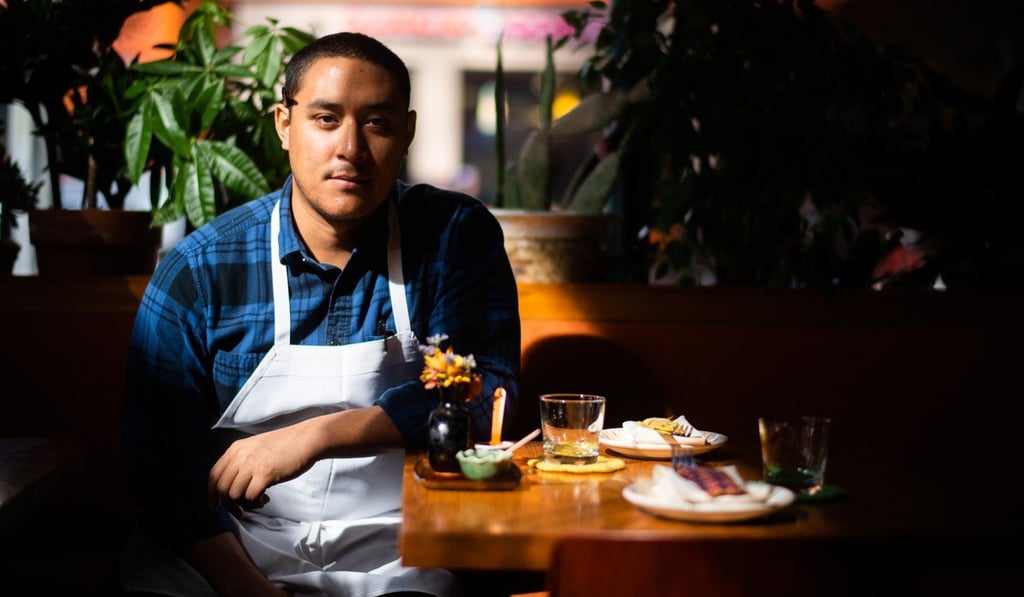
Chang grew up in the sun and surf of idyllic Santa Barbara, surrounded by his Mexican family and people from across South and Central America, China, and Southeast Asia. He also returned to Asia frequently.
“When I was a teenager, I would visit my dad every year in Japan, and there was also probably four or five years where we went to Hong Kong every year too,” he recalls. “Those trips and experiences showed me some of my favourite food in the world. That food still is definitely the closest to comfort food for me.”