The Jollibee story: how a Philippine fast food franchise took on the world
- Philippine brand Jollibee has grown from two outlets in Manila in the 1970s to more than 1,300 restaurants in its home country and overseas
- The chain adapts its menus for different cultures, but its Chickenjoy fried chicken is a favourite everywhere
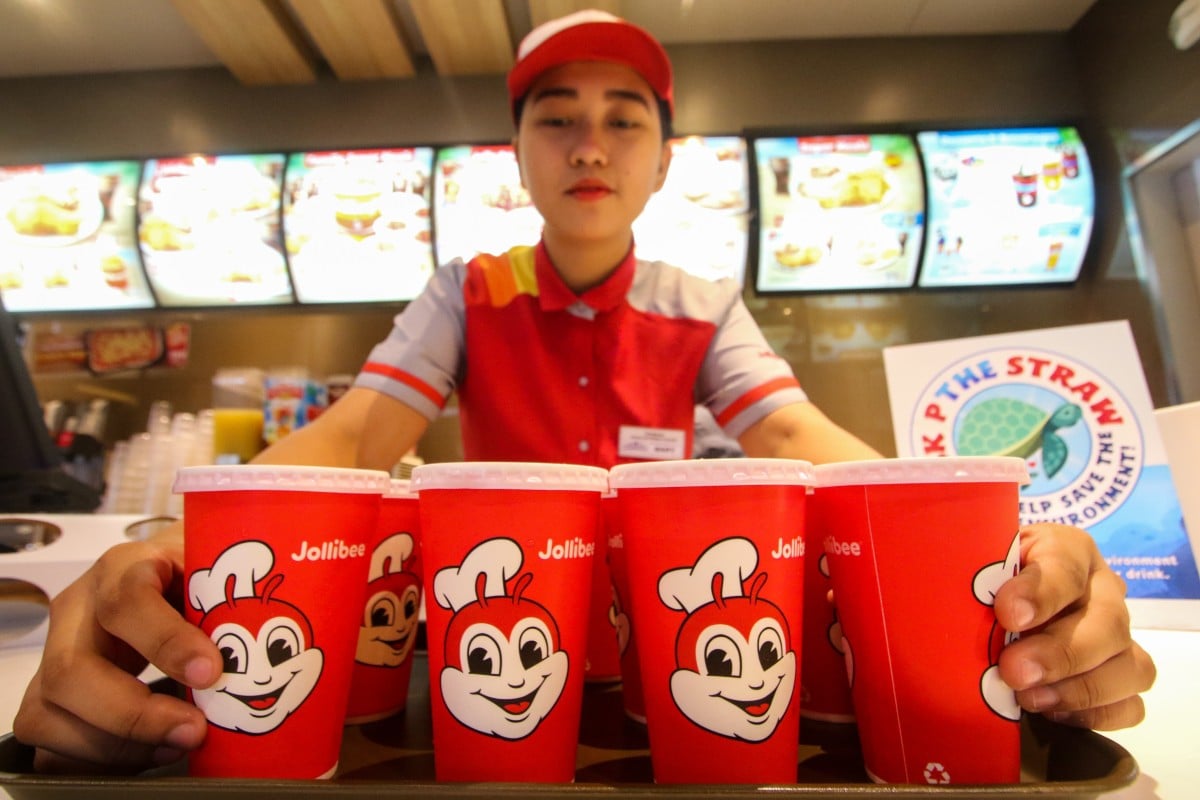
You only need to spend about 20 minutes in the Philippines to realise that Filipinos really love to eat.
The country has a dazzling profusion of dining outlets, in particular at the casual end of the market, but one brand is seen more than others. And it’s a brand that also seems to induce warm, fuzzy feelings in more or less everyone in the country: Jollibee.
The fast food company has 1,150 outlets in the Philippines, and a bigger share of the Philippine market than its two biggest competitors combined, as well as 234 overseas outlets in 15 territories. It is the 24th largest fast food chain globally (including coffee chains) by number of branches, and fifth among companies not from the United States.
It refers to itself in promotional posters displayed in its offices in the Manila business district Ortigas Centre as the largest Asian restaurant company in the world.
This food and beverage empire was born in 1975 – and at the time served only ice cream. It was the brainchild of company founder and chairman Tony Tan Caktiong (generally referred to by his staff as Sir Tony in a sign of respect), the third child of seven in an impoverished family who moved to the Philippines from Fujian province in China. His father opened a small Buddhist restaurant in the southern Philippine city of Davao when Tan was a child.
Tan himself studied for a degree in chemical engineering, but aged just 22, he was inspired by a trip to an ice cream plant to spend his family’s savings on the franchises for two Magnolia Dairy Ice Cream outlets, Cubao Ice Cream House in Quezon City, Metro Manila, and Quiapo Ice Cream House in central Manila.