The story of biryani, rice dish for special occasions that unites the people of India, Pakistan and Bangladesh
- Everywhere you go in South Asia, cities have their own version of the spiced meat and rice dish that’s a reminder of their common heritage
- The perfect biryani is slow cooked to allow the flavours to blend, the meat should be tender and succulent, and every grain of rice separate

Tender, succulent pieces of meat. Fluffy, long-grained basmati rice, infused with saffron, nutmeg and cardamom and topped with browned crispy curls of onion and a fried garnish of cashews and raisins. Served with raita (a condiment made of yogurt) and bagara baigan (roasted aubergine). No wonder diners around the world love the flavours of biryani, a gastronomic delight of the Indian subcontinent.
Cooked in homes across the region on special occasions such as weddings and festivals, it also on the menus of fancy restaurants and roadside eateries. Biryani is a dish everyone revels in and one that, like the game of cricket, unites India, Pakistan and Bangladesh.
“Biryani is much more than a dish. It means celebration and evokes memories of childhood, of the fragrance of spices that would fill the house as my mother laboured for hours in the kitchen preparing it,” says 46-year-old Yesrab Ali Mirza, a Hong Kong resident who grew up in Chennai, India. “My favourite part of Eid was feasting on biryani with all my cousins.”
“The best thing about biryani is sharing it,” says 45-year old Fariha Mehraj, a Hong Kong-based homemaker who grew up in Islamabad, Pakistan. “It brought families and friends closer, and it was a dish we bonded over. The recipe Ammi [mother] used for biryani was a family tradition and passed on to her from my grandmother. I am lucky that I learned to make it from her.”
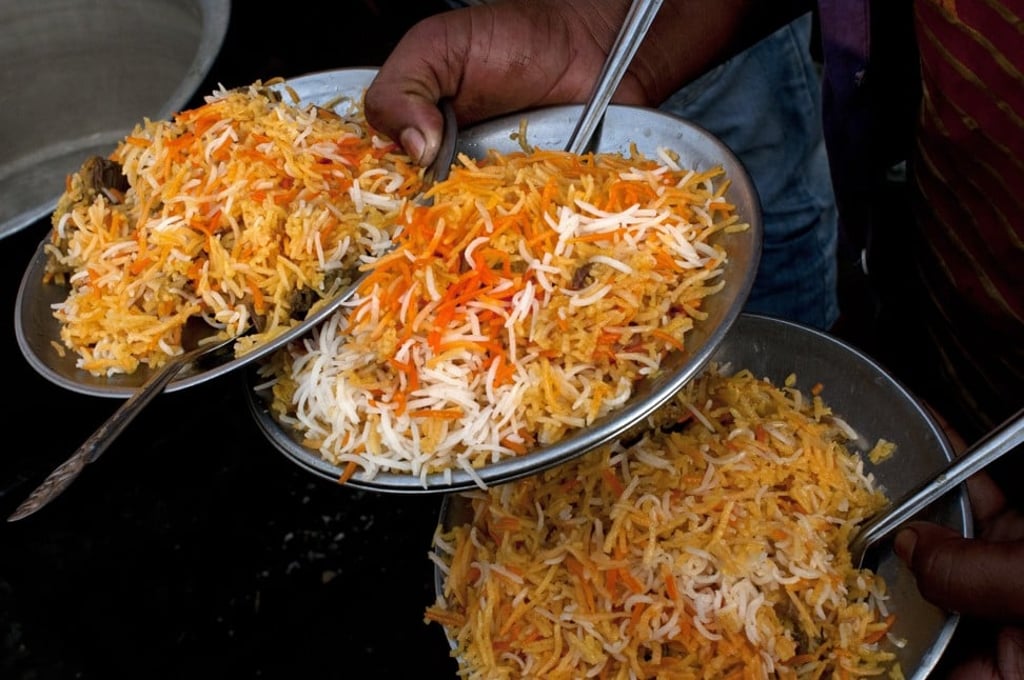
The history of biryani spans centuries, civilisations and cooking styles; the dish evolved into its present form through absorbing elements of different cultures.
The rice dish probably came to the Indian subcontinent from Persia, modern-day Iran. “The word ‘biryani’ is derived from the Persian word ‘berenj’ meaning ‘rice’ and ‘biryan’ meaning ‘to fry or roast’,” says 44-year-old Tara Deshpande, the author of several books on Indian cooking.