Story behind dalgona coffee, coronavirus social media craze with roots in South Korea
- It’s all the rage on TikTok, Instagram and Facebook but the dalgona coffee challenge has roots in a South Korean street treat popular in the 70s and 80s
- The new craze started in January when Korean actor Jung Il-woo showed how to make the drink
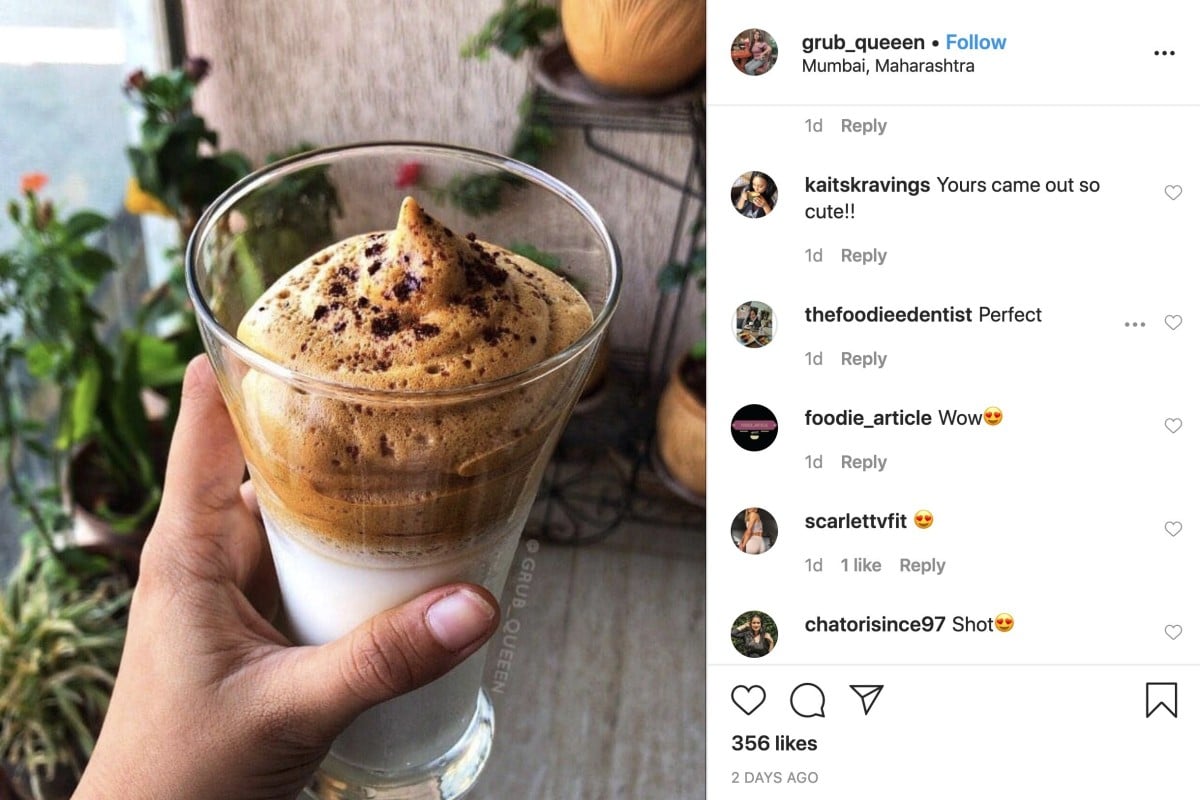
All over social media people are taking the dalgona coffee challenge and posting their creations.
First they mix two tablespoons of instant coffee or espresso powder, two tablespoons of sugar, and two tablespoons of very hot water. Some people use a hand mixer, while others use a spoon, constantly stirring the concoction until it turns from brown to beige and takes on a thick, foamy texture. Then they spoon the mixture on top of a glass of hot or cold milk.
The result? A sweet-tasting milky coffee.
“When I was a child I remember old guys selling these honeycomb snacks,” says Kenny Hong Kyoung-soo, co-founder of Cafe Cha in Seoul. “I ate them almost every day after school. They were very cheap, just sugar and water, and they had a very sweet taste, followed by a bitter aftertaste.”