History of chickens: how the bird became world’s primary protein source and a food favourite
- Around 7,500BC, humans began to tame and breed the red jungle fowl, the ancestors of today’s hundreds of types of domestic chicken
- A team of researchers believes new findings could provide crucial data for the future health of the species
The wiry bird scuffling around in the mountainous forests near the northern Thailand-Myanmar border does not look like much, but this scrawny red jungle fowl has been tapped as the primary ancestor of the modern world’s all-important domestic chicken.
The wild fowl’s descendants can be found on the tables of people everywhere, roasted with beans and potatoes, glazed, grilled, skewered, stuffed, and transformed into soups and stir-fries.
About 7,500BC, when humans were learning how to cultivate edible plants and make primitive pottery, they began to tame and breed the red jungle fowl – a tree-roosting bird with a big, fluffy tail, a brightly coloured comb and glossy brown neck feathers.
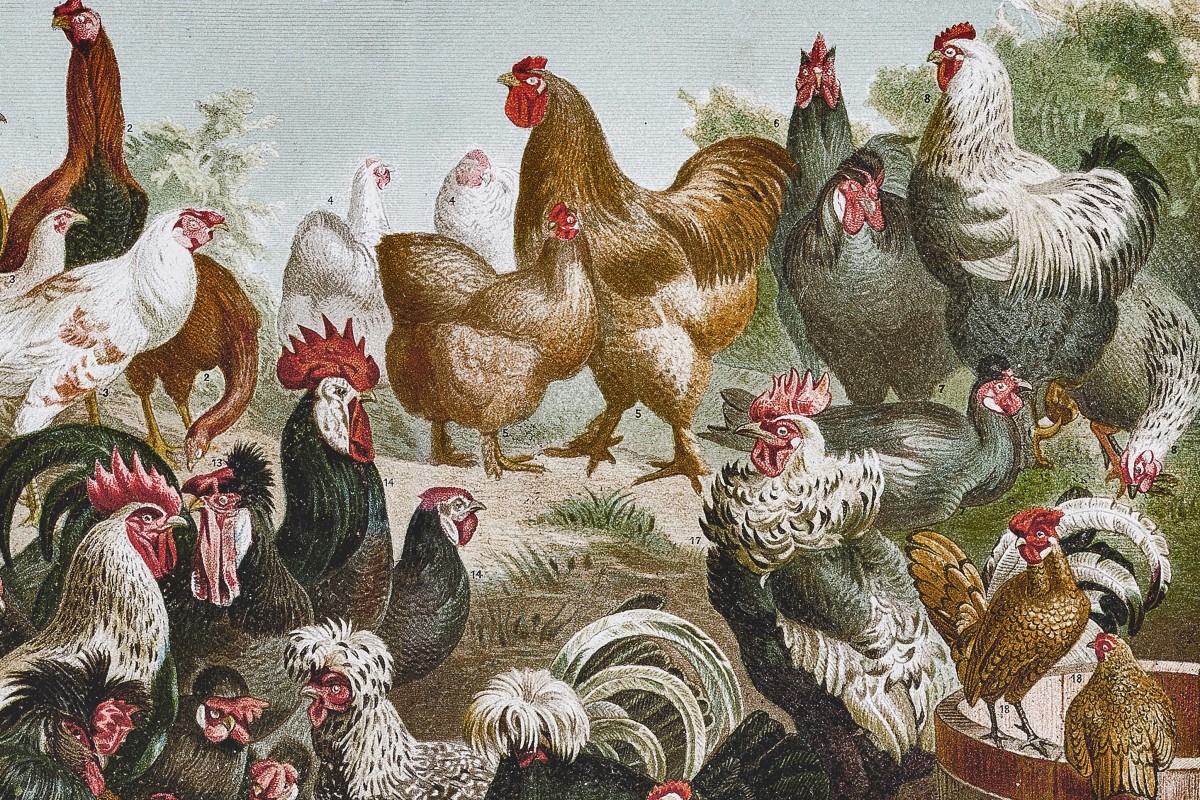
Crossbreeding and domestication of the jungle fowl over the centuries has given the world hundreds of types of domestic chicken, from the black-fleshed Silkie to the robust Jersey Giant, and a total population today of about 24 billion chickens. The domesticated descendants of the wild Asian jungle fowl are now humanity’s primary source of protein.
Research published in the scientific journal Cell Research in June pinpointed one particular subspecies, Gallus gallus spadiceus, as the modern chicken’s primary ancestor. It took genome sequencing to finally untangle the chicken’s multi-branching family tree, and experts believe the research findings will provide crucial data for the future health of the species.
“Understanding the domestication history of chicken is not only crucial to understanding where, when and how humans have domesticated and improved this species, but also helps to illustrate our human history and agriculture development in the past,” says Professor Wang Ming-shan from the Chinese Academy of Sciences’ Kunming Institute of Zoology, who led the research.