Egypt’s gift to India: the samosa, popular fried pastry snack named after the pyramids
- The snack travelled from Egypt to Libya to Central Asia before arriving in India via the Middle East
- The key to a good samosa lies in the pastry, says an Indian chef. He describes it as the perfect comfort food because it is tasty, cheap and versatile
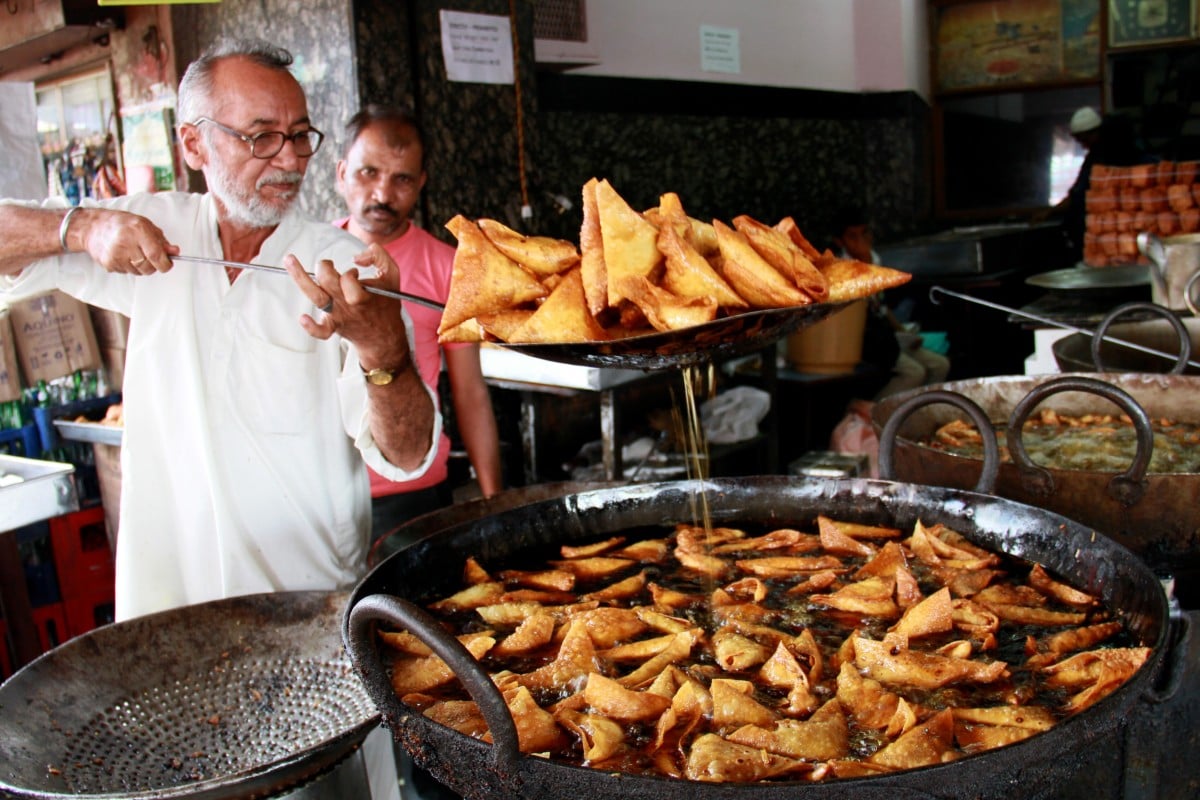
Fans of the samosa in India call the triangular filled pastry the “king of snacks”, and Samosa Day is celebrated with much fervour across the South Asian country each year on September 5. Roadside stands selling the fried snack are ubiquitous across India.
The pastry shell is prepared with wheat flour, stuffed with spicy mashed potatoes, onions, green peas, a pinch of asafoetida and other spices and its edges sealed. It is fried until golden, drained and placed on a newspaper sheet to absorb the excess oil, then served with mint sauce or tamarind chutney.
Despite India’s craze for the samosa, it surprises many to know that its provenance isn’t Indian. The snack travelled from Egypt to Libya to Central Asia before arriving in the subcontinent via the Middle East.
Some food historians claim it was brought to India by chefs during the Delhi Sultanate period in the 13th century. The Delhi Sultanate was an Islamic empire that stretched over the Indian subcontinent for more than 300 years.
“Originally named samsa, after the pyramids in Central Asia, historical accounts also refer to the delicacy as sanbusak, sanbusaq or even sanbusaj, all deriving from the Persian word sanbosag,” says food historian Ajay Shukla.