As horse meat exports from Uruguay rocket, saving some from slaughter has become an NGO’s mission
- Most of Uruguay’s race, sports and work horses are fattened up for slaughter after they are retired – destined for someone’s plate somewhere else in the world
- An NGO set up to save some has rescued and rehomed 250 on farms across the South American nation. ‘Their only mission … is to exist,’ one host farmer says

Among a motley collection of rescued farm animals, four horses graze peacefully on a farm outside the Uruguayan capital, Montevideo, blissfully unaware they had narrowly escaped the chopping block.
Uruguay, a country where horses are not considered food but companions, has seen a rise in equine meat exports, prompting efforts to rescue horses destined for slaughter.
In 2020, the small South American nation was the seventh-largest exporter of horse meat, according to the Observatory of Economic Complexity economic data site, with Belgium, Russia, France and Japan among the top importers.
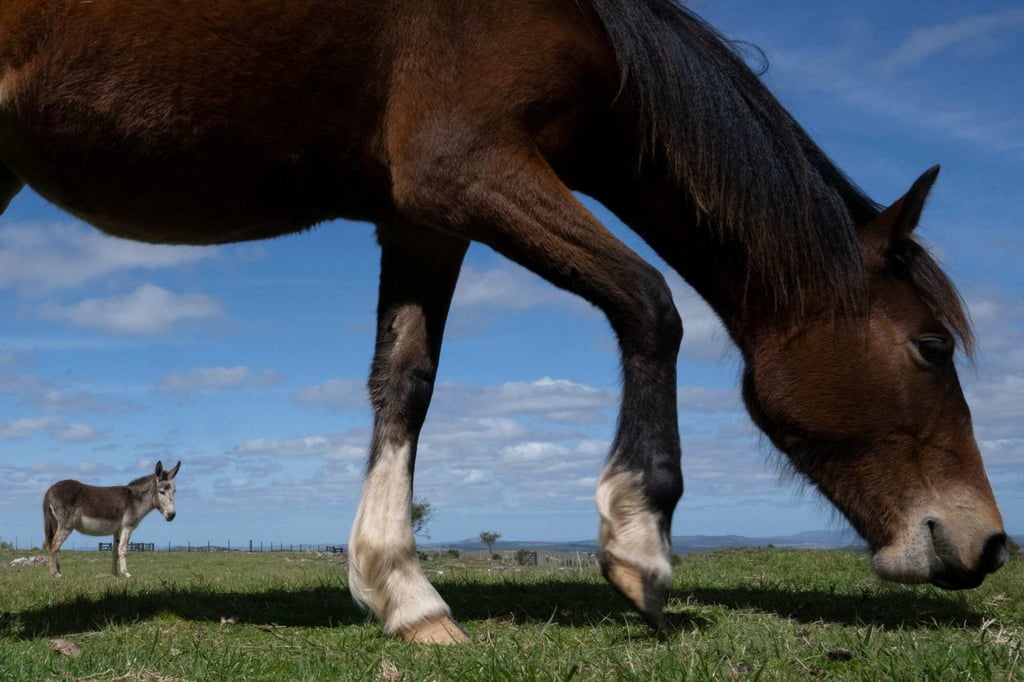
Uruguayan horses are not bred for meat, but used in racing or dressage and on farms – often by cattle-breeding horsemen who prefer to travel the grassy plains on horseback rather than by car.