Sakai knives hand forged in Japan a chef’s favourite and a hit with overseas tourists
Forged and sharpened by hand based on centuries of tradition, Sakai’s knives are used widely by chefs. Sales to overseas tourists are rising

The global popularity of blades forged in the western Japan city of Sakai is on the rise, with foreign tourists boosting sales of the city’s native brand that is widely regarded as one of the country’s top three traditional knives.
The Sakai Traditional Crafts Museum saw annual sales of its blades surpass 100 million yen (US$660,000) for the first time in the 2023 financial year, and it expects another record this financial year with visitors from overseas accounting for half of the sales.
Sakai blades date back to Japan’s Kofun period from the third to seventh century, when blacksmiths gathered in the Sakai region to forge iron tools for tomb construction for the ruling class, according to the museum operated by the city.
One such ancient tomb is a keyhole-shaped mound administered by the Imperial Household Agency as the burial ground of Emperor Nintoku (290-399), now a Unesco World Heritage site.
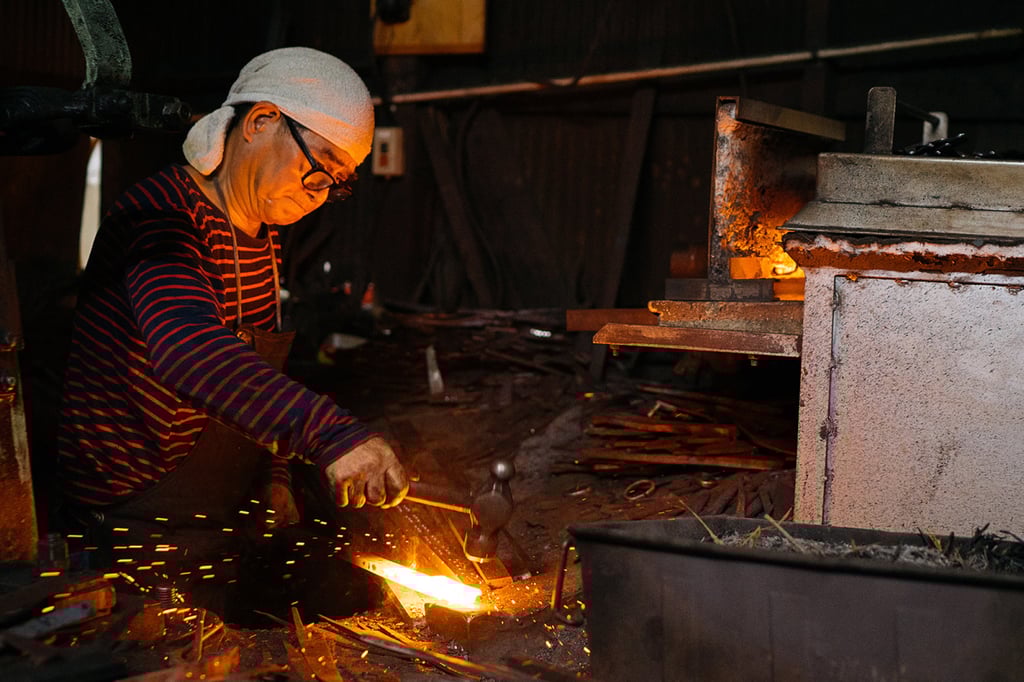
The industry began to flourish in the late 16th century when tobacco was introduced to Japan by Portugal and spurred the development of high-quality tobacco knives, leading to an endorsement by the Tokugawa shogunate – the military government of Japan – that lasted until 1868.