ReviewMy week with Samsung Galaxy Fold: it’s the future of personal computing, assuming screen hinge is durable
- Foldable phone may be one of the small number of handsets that, like the iPhone, changes the direction of smartphone design – if its hinge mechanism holds up
- Folded up its screen is small, but open it and you have a 7.3-inch display that’s great for multitasking; actions begun on one screen carry over to the other

In the history of mobile phones, there are a fewer than a handful of devices that have changed the direction of the entire industry, with the iPhone being the most influential.
Samsung’s much-delayed Galaxy Fold, for all its gen-one shortcomings and high price tag, may be part of that rarefied group, based on a week spent trying it out.
Design and hardware
The Samsung Galaxy Fold has two physical looks. In its standard, “unfolded” form, it is an unusually thick handset with a relatively tiny 4.6-inch screen that, because of an elongated 19:9 aspect ratio, feels very cramped by 2019 standards. However, anything you can do on a smartphone, you can still do on this screen – just expect a few more typos because of how cramped the on-screen keyboard is.
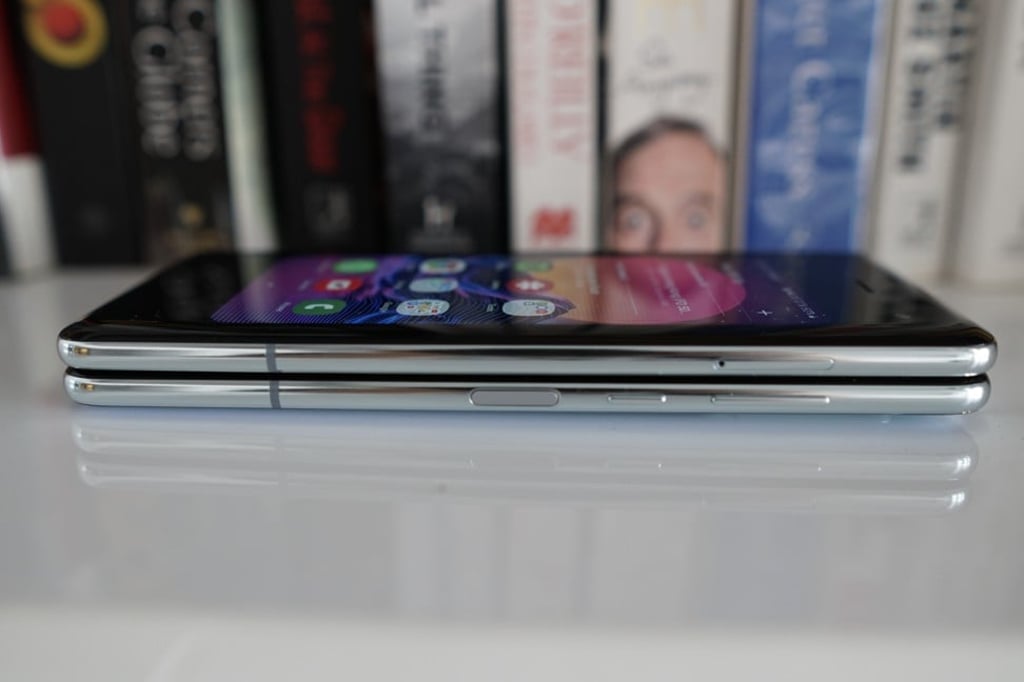
Its second form factor is the reason for its existence: the device flips open horizontally – like a book – to reveal a 7.3-inch screen. The display can bend and fold like a book because it’s made of plastic; these plastic OLED (P-OLED) panels have long been in development by Samsung and fellow South Korean rival LG.
The Fold’s P-OLED display produces the usual vibrant colours, high resolution and excellent viewing angles that Samsung panels are known for, but the nature of a plastic folding screen brings two undesirable side-effects: the plastic screen is harsher to the touch compared to the premium glass screens we’ve become used to on smartphones, and there is a noticeable crease at the folding point when light hits the spot at certain angles.