What Hongkongers can do about frozen shoulders: exercises, why we get them and tips on avoidance
Frozen shoulders are painful, frustrating and still much of a mystery to the medical profession. We spoke to two specialists on what treatments exist and how to best prevent the problem in the first place

When Wong Huey-maen first experienced pain in her left shoulder five years ago, she dismissed the soreness as a muscle ache and hardly gave it a second thought. But it soon worsened. Within months, she could no longer carry heavy weights. Even simple movements, such as cleaning the table or reaching for something on a high shelf, could trigger a sharp pain in her shoulder.
Looking for a solution, Wong, now 50, has been to nine acupuncture sessions, taken Chinese herbal medicine and seen two osteopaths. She even tried out alternative medicine such as bioresonance therapy, where electromagnetic waves are used to treat physical ailments. But to her disappointment, nothing seemed to work. “At most, they provide temporary relief. So instead I just have to avoid certain movements, which can be extremely troublesome,” Wong says.
Help Hong Kong’s elderly – learn the 12-step ‘comfy acupressure’ massage
Physicians have diagnosed her condition as “fifties shoulder” or “frozen shoulder”. Both terms are commonly used to describe conditions involving shoulder pain, the third most common musculoskeletal complaint after neck and back pain. However, like many others, Wong is still struggling to understand what her condition is and how to treat the pain.
Physiotherapist Malcolm Minns, from Byrne, Hickman and Partners physiotherapy clinic, says “frozen shoulder” is often used incorrectly as a catch-all term for people with shoulder pain. “‘Fifty-year-old shoulder’ is also a nonsense term that is neither a diagnosis nor a description of a problem,” he adds. “Nobody is diagnosed with ‘middle-aged back’ or ‘70-year-old knees’.”
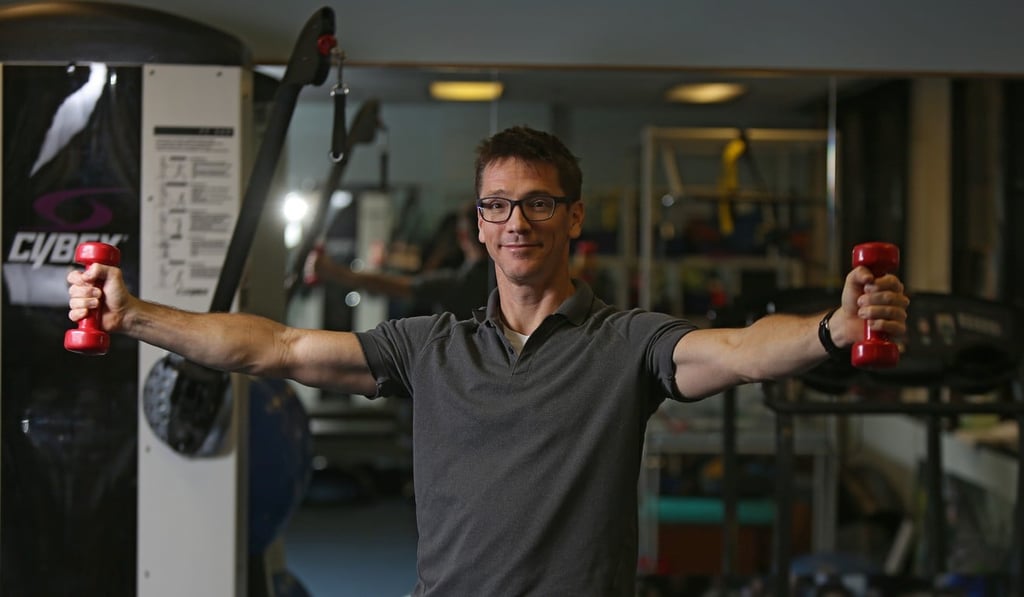
Frozen shoulder, also known as adhesive capsulitis, occurs when the soft tissues or muscles around the shoulder joint become inflamed and scar tissue develops. It is often confused with other conditions such as degenerative changes in the rotator cuff, which is a group of muscles and tendons that surround the shoulder joint and keep the head of the upper arm bone securely within the shoulder’s shallow socket. In the case of a true frozen shoulder, however, the biggest distinction is the loss of passive range of motion.