The vegan fried chicken made of wheat gluten, a meat substitute in China for 1,500 years and packed with protein
Diners queue outside the Temple of Seitan, a London takeaway restaurant, for crispy wings, burgers and nuggets that look and feel like there’s chicken inside. They’re made of something called seitan – so what’s this wheat meat all about?

It’s 5pm on a Friday and the queue at Temple of Seitan is beginning to stretch out of the door. Situated in London’s Camden borough, the small takeaway restaurant sells fried food of an unusual kind – it’s all vegan.
Diners tuck into crispy, battered “chicken” wings, burgers and nuggets cooked to mirror the sensation of eating real meat. The secret to Temple’s deceptively fibrous analogue is seitan, or wheat gluten. Marketed as a new trend in plant-based eating, it dates back as far as 1,500 years to China. For reluctant vegetarians who miss the taste and experience of eating meat, gluten is a game-changer: under the name “textured wheat protein”, it’s the main ingredient after water in the Impossible Burger, made by Silicon Valley start-up Impossible Foods.
But what is it? Making seitan from scratch involves “rinsing” flour of its starch to leave just the gluten proteins as a stodgy, elastic ball, which can be marinated and then fried or baked. In traditional Chinese cuisine, gluten, or mianjin, is used as a common substitute for meat, especially pork, soaking up different flavours and sauces like a sponge. When home-made, wheat gluten is high in protein and low in carbohydrates, but tastes of very little on its own, which is why shop-bought seitan products are often high in salt, fat and other flavour enhancers.
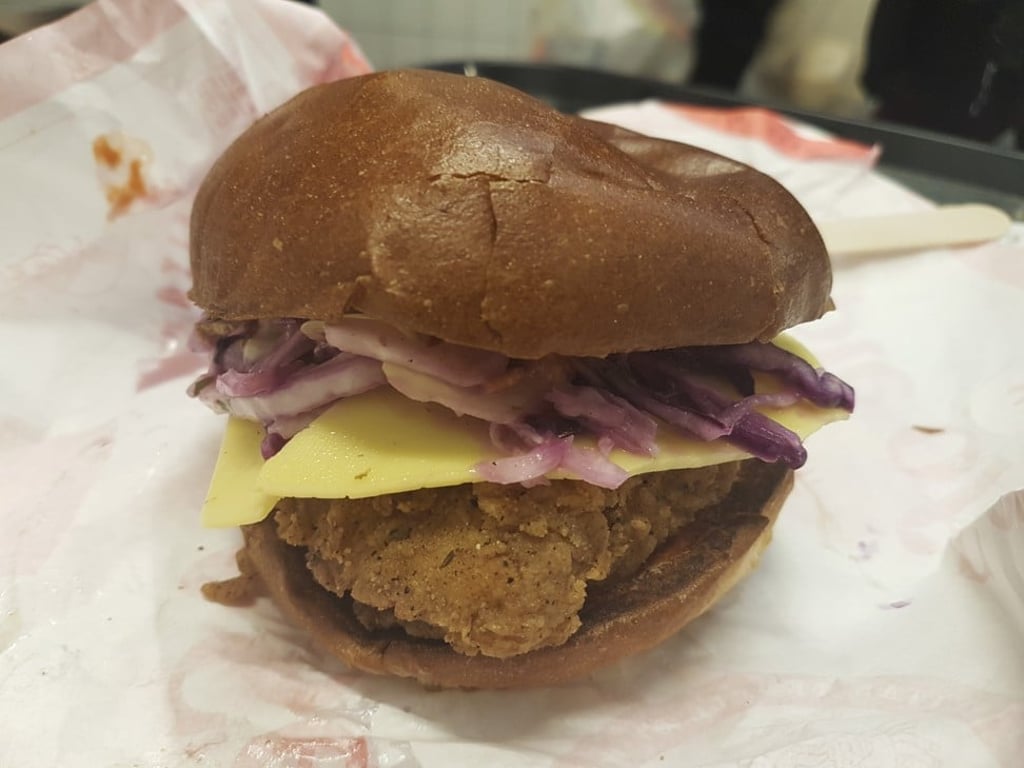
“A three-ounce (85g) serving usually contains between 15 and 21 grams of protein, which is roughly equivalent to the amounts in chicken or beef,” says Hong Kong nutritionist Wynnie Chan, who advises caution when purchasing pre-packaged, flavoured seitan. “You’ll often see it sold in supermarkets in horrible shades of red and orange and coated with loads of sauce. If they’re pre-packaged or canned, they will be usually have been deep fried first, so will be high in fat, calories and sodium.”
But that is precisely the reason seitan has gone down a storm in London, a city of fried chicken shops, where biting through crispy buttermilk batter and licking meat juice from greasy fingers is the quintessential finale to many boozy evenings out on the town, or the fuel after a late-night worker’s shift.