India’s leprosy disaster, its millions of victims, and the vaccine that could stop many being disfigured
- Their fingers become so twisted and their nerves so damaged simple actions are impossible; some sufferers lose their noses; many are crippled
- In 2005 India declared leprosy eliminated , stopped looking for sufferers and left it to them to seek help. Few did. Now a vaccine is being rolled out

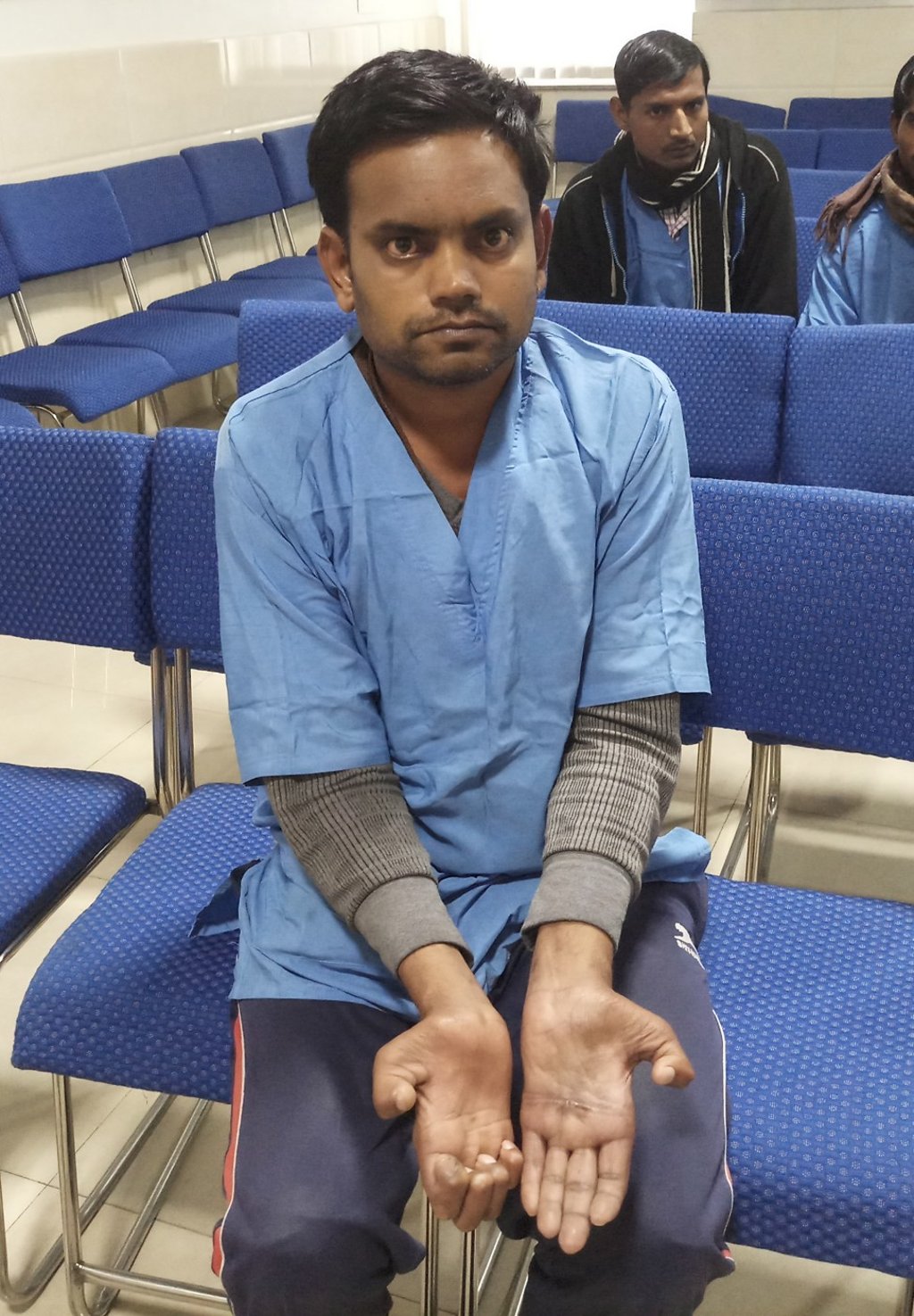
Fifteen years ago, Tribuwan ignored the first pale patch on his finger. When it started to feel numb, he ignored that, too. Later, married and with three children, the symptoms got worse but he avoided going to the doctor because of the fee. Then his eyes became flaming red. His colleagues at the petrol pump where he worked grew worried about him.
Eventually, when his fingers became clawed, he went to a doctor, who failed to detect leprosy. “One day, I was putting petrol in someone’s car when the driver looked at my hands. He told me that he had been treated for leprosy at this hospital and told me to come here,” he says, sitting in the Leprosy Mission Trust Hospital in Shahdara, east Delhi. Now 33, he can no longer close his eyes, another effect of his condition.
Tribuwan is one of the many outpatients who go for daily treatment to the hospital, which is run by the Leprosy Mission Trust, a Christian group. Leprosy is a contagious disease of the skin, mucous membranes, and nerves; it causes discolouration and lumps on the skin and, in severe cases, disfigurement and deformities.
It is cases like Tribuwan’s that have alarmed the Indian government.
The country accounts for 66 per cent of global leprosy cases. Official figures show there were 135,485 new cases of leprosy in India in 2017, up from 127,334 in 2016. So much for eradicating the disease by 2018 – the government’s target.