How robot nurses could help care for world’s elderly and disabled, and ease a shortage of the human kind
- A British-built robot, Baxter, can detect if a human needs help moving or dressing, and use its sensors and dexterous fingers to lend a hand
- Japan already has robotic care at homes for the elderly, while a California firm has developed ElliQ, a robotic companion for older people
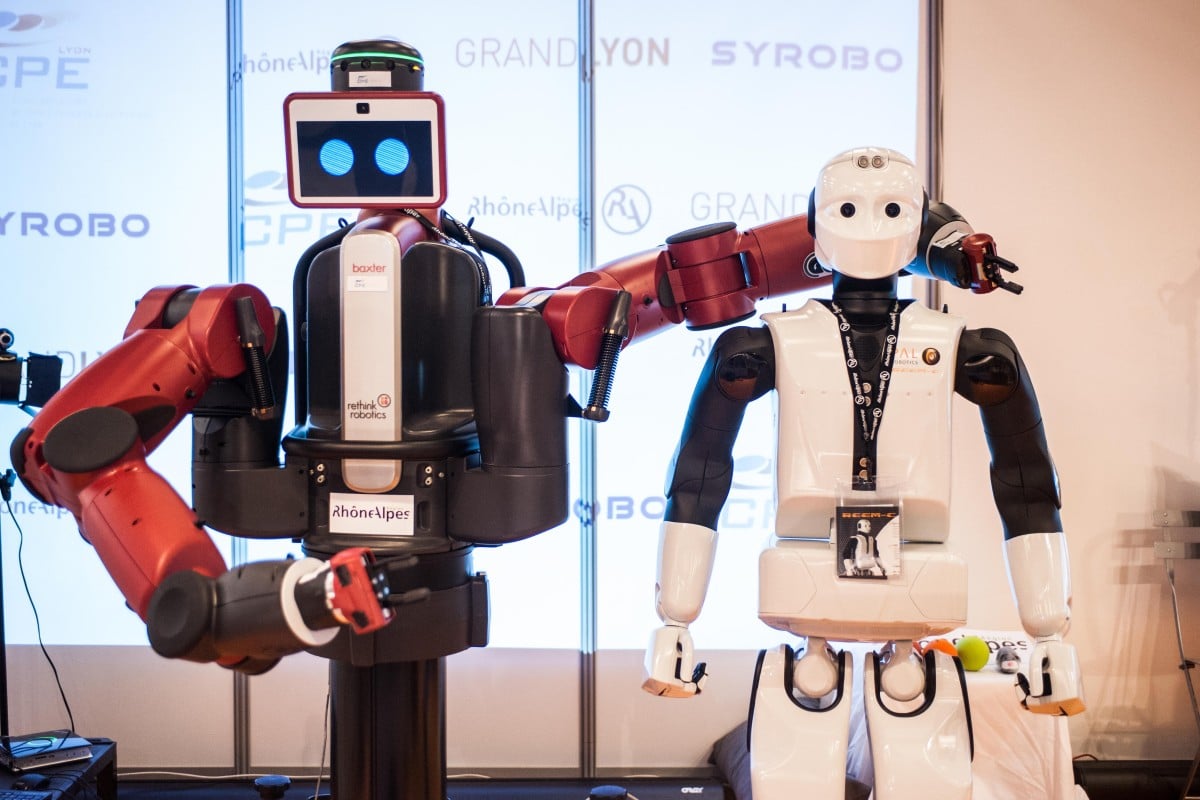
A robotic nurse with dexterous 3D-printed fingers that can help dress the elderly or physically challenged is being developed by students and professors at Imperial College London.
A modified version of a robot nicknamed Baxter, the machine has two mechanical arms, an animated face and sensors to help it analyse patterns and detect if a human is struggling to lift or move a limb.
“There’s an increasing need for technologies that will allow people to maintain their independence, and through that, satisfy their fundamental human desire for privacy and dignity,” says Yiannis Demiris, the director of the personal robotic laboratory at Imperial.
Baxter was built in 2011 by a US start-up, and has since become one of the main research robots used by universities helping graduate students learn about robotics. It has undergone trials to help aid workers in Africa and work on factory conveyor belts.
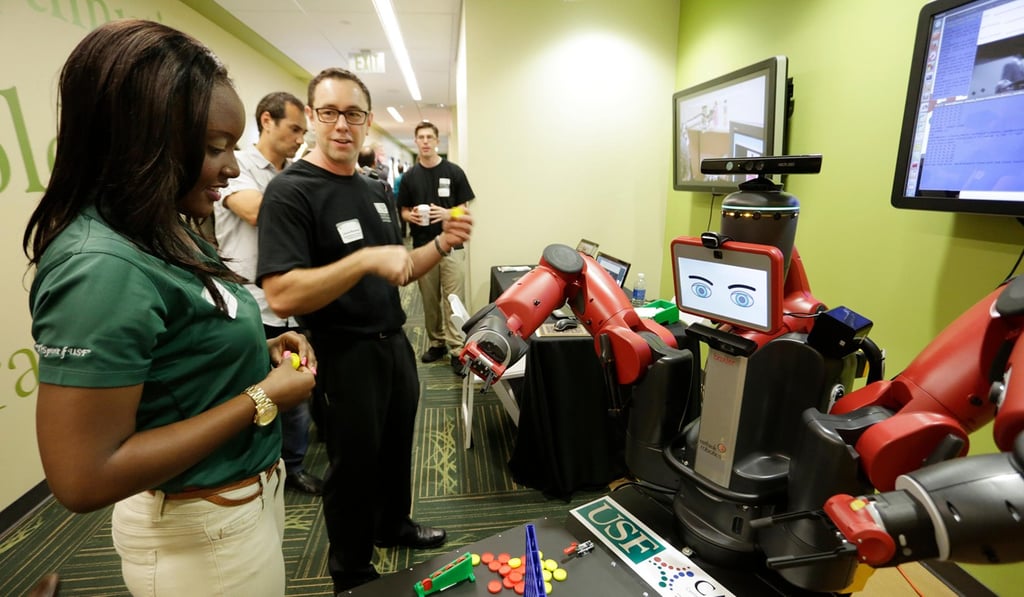
Imperial’s version aims to improve the machine’s ability to read motions and builds the skills it has so it can complete tasks such as dressing. The scientists are also 3D printing ’fingers’, increasing its dexterous capabilities.