Advertisement
Wellness
LifestyleHealth & Wellness

Why Asian women still suffer period stigma, and how a culture of openness could end taboos

  • Women spend an average eight years of their lives on their period, and in some cultures in Asia they are thought of as unclean or shameful
  • Some are even locked away during menstruation, but women’s groups and companies are fighting against this and other taboos

Reading Time:5 minutes
Why you can trust SCMP
A Nepalese woman looks at her mobile phone in a hut to which she has been banished during her menstruation. Women undergoing their period are forced into a monthly exile in basic huts, and barred from touching food, religious icons, cattle and men. Photo: Prakash Mathema/AFP
Agence France-Presse
Olivia Cotes-James wants us to talk about menstrual health. Properly. No more euphemisms, no more opaque marketing, no more superstition, and no glossing over cramps, bleeding, or pain. Reframing current attitudes is vital for female empowerment and health, as well as the environment, says the 29-year-old founder of Luüna Naturals, which bills itself Asia’s first period care company with an all-female leadership team.
Last year the United Nations warned that taboos around menstrual health were “disempowering” women worldwide, and called for action to end it.

“Period stigma is the biggest barrier to the global advancement of women,” says Cotes-James. “Periods can still cause us to feel dirty, ashamed and frustrated. If menstrual taboos persist and society continues to devalue our fundamental female biology, what hope do we have of ever being seen as equal?”

Advertisement

On average, women will spend up to eight years of their lives on their period, according to Unicef. They are vital to the continuity of the human race, but myths and misconceptions still dominate worldwide.
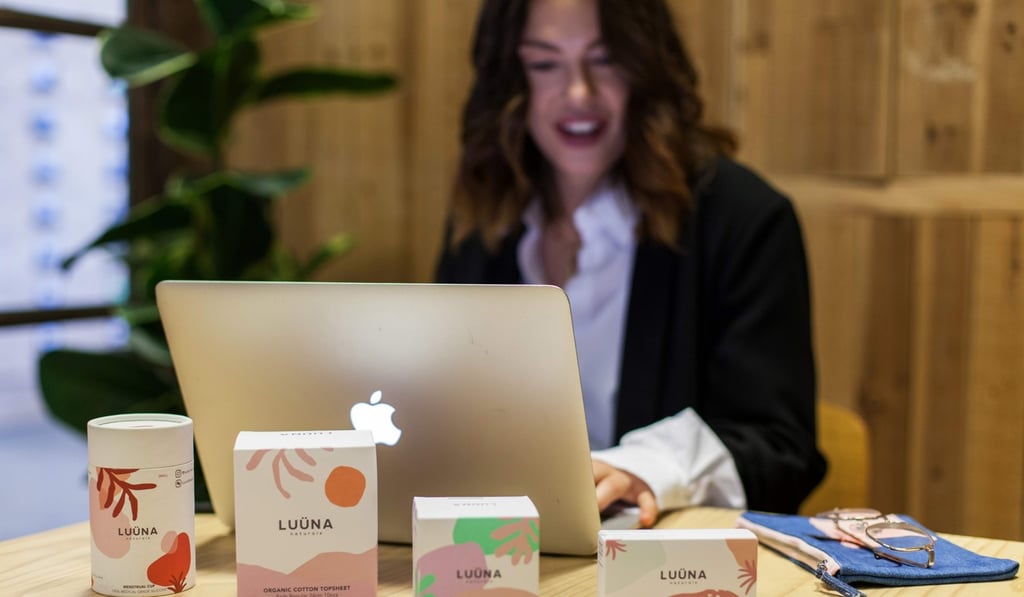
Olivia Cotes-James, founder of Luüna Naturals. Photo: Veronica Sanchis Bencomo/AFP
Advertisement

The arrival of menstrual cups, period underwear, which can remove the need for products entirely, and apps that track your cycle have led to a new culture of openness in a generation keen to verbalise the realities of the female experience – from #MeToo and #ShoutYourAbortion, to miscarriage awareness campaign #Iamthe1in4 and #Trustaftertrauma, where women share stories of obstetric violence.

Bloggers and vloggers lay bare the realities of how period products work on social media. There is even a period emoji in the pipeline.
Advertisement
Select Voice
Choose your listening speed
Get through articles 2x faster
1.25x
250 WPM
Slow
Average
Fast
1.25x