Advertisement
Scientists increase their presence on social media to counter conspiracy theories and fake news, and make complexities simple
- A Dutch microbiologist tweeted a one-sentence summary of an antiviral drugs study hours after its release. Her tweet sparked a wide-ranging debate online
- A Swiss-based researcher gives daily explanations on scientific research and says ‘dismantling nonsense takes 10 times more energy than spreading it’
3-MIN READ3-MIN

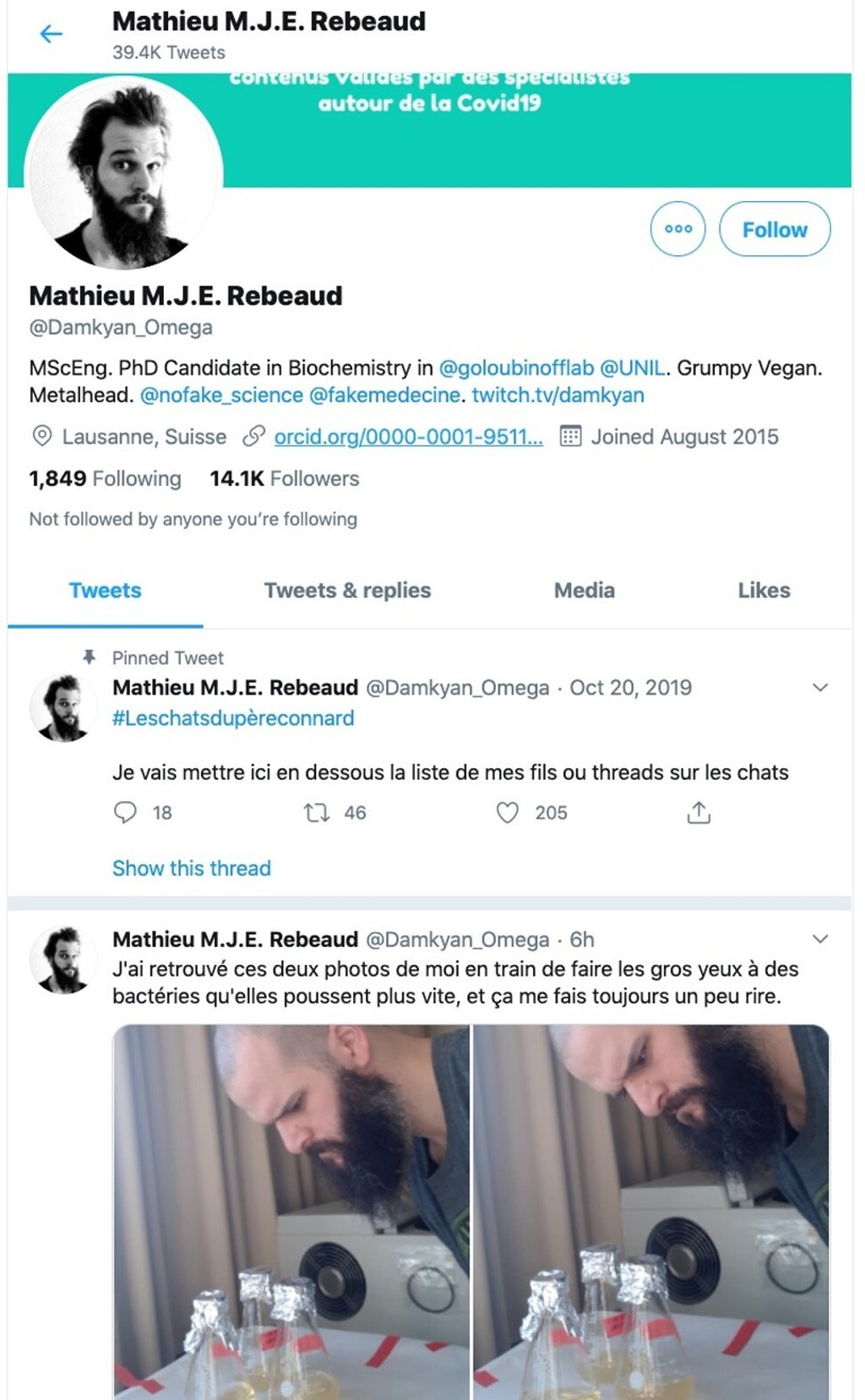
With cat photos and sometimes scathing irony, Mathieu Rebeaud – a Swiss-based researcher in biochemistry – has nearly tripled his Twitter following since the coronavirus pandemic began.
Rebeaud, who now has more than 14,000 followers, posts almost daily explanations of the latest scientific research on the virus. In particular, he aims to fight misinformation that spreads as fast as the virus itself.
He is among a growing number of doctors, academics and institutions who in recent weeks have adapted their scientific messaging in hopes of countering what has been termed an infodemic – a deluge of information, including widespread false claims, which experts say can pose a serious threat to public health.
Advertisement
To cut through the noise, however, it is vital to work quickly and maximise social media engagement to get simple prevention messages across to the public, according to researchers and specialists.
Advertisement
“In the case of the Covid-19 pandemic, conspiracy theories provide complete, simple, seemingly rationalistic and watertight explanations,” Kinga Polynczuk-Alenius, a University of Helsinki researcher, said.
Advertisement
Select Voice
Select Speed
1.00x