Three repurposed Hong Kong industrial buildings that show the benefits – and beauty – of combining the old and the new
A Kwun Tong office block, the Camlux Hotel in Kowloon Bay, and Ovolo Southside in Wong Chuk Hang all grew from relics of Hong Kong’s industrial past, with clever designs that value heritage key to their success

Tearing down an old building to make space for something new is not always the best way to maximise returns from prime Hong Kong real estate.
Last year, architecture firm MVRDV Asia completed its rebuilding of an old Kwun Tong factory from its bare bones, keeping the raw structure and using glass and stainless steel infill to create the interior spaces. “These abandoned historical buildings provide an opportunity for a renaissance of creative solutions that breathe new life into the area,” says architect Marta Pozo, a director at the firm.
In 2013, when the firm’s client, Gaw Capital Partners, bought the 44-year-old Cheung Fai Building on Wai Yip Street, it was just one of a number of little-used industrial structures in the area once occupied by consumer goods manufacturers.
It was also part of a larger urban development scheme that aims to turn the post-industrial district of East Kowloon into Hong Kong’s new central business district. Transformation completed, it was sold recently to an undisclosed buyer.
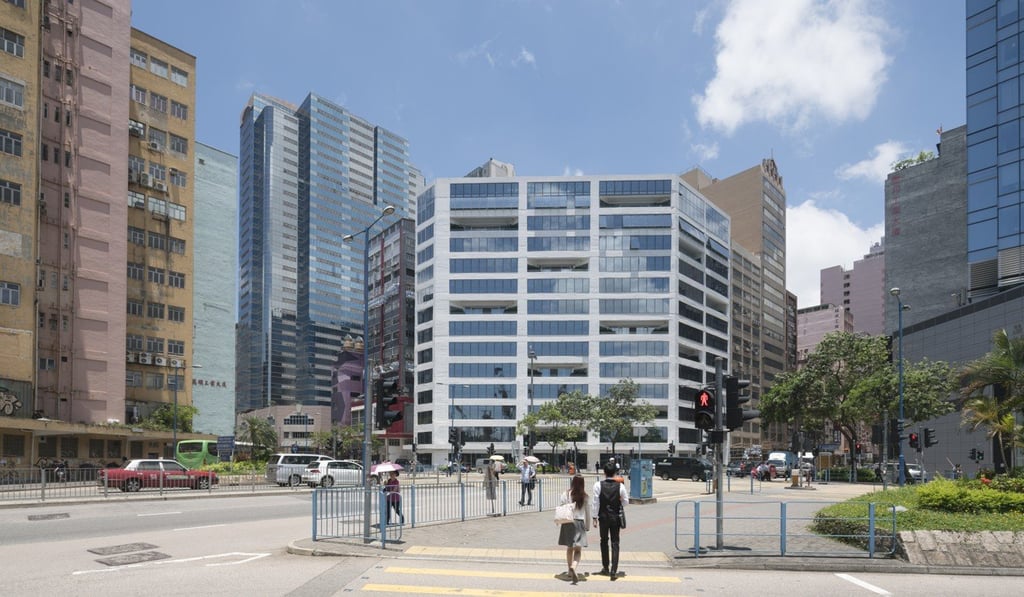
Glass and stainless steel were chosen to bring out the purity and simplicity of the building design, Pozo says. “We imagined a building that would be a bridge between Kwun Tong’s old industrial roots and the neighbourhood’s future as a modern business hub.”
The 194,000 sq ft building was stripped down “to its beautifully raw and butch primary structure”, including the removal of all non-structural walls, to create open space on each floor, Pozo says. The white-painted concrete shell was accentuated with glass and stainless steel “to highlight the purity and beauty of the building”.