How to make a micro flat liveable with shape-shifting furniture – turn your home office into a bedroom at the touch of a button
Multifunctional furniture systems combine clever, space-saving designs with automation to create rooms that can change according to need – ideal for the micro-apartments that are spreading in Hong Kong and other urban centres

“Alexa, it’s sleep time.” In the not-too-distant future, that could be the cue for your office to disappear and your bed to take its place. With apartment sizes getting ever smaller, some designers are using technology to transform the way we live, while others are coming up with multifunctional furniture to shape-shift our worlds.
The United Nations projects that another 2.5 billion people will be living in urban areas by 2050 – or 68 per cent of the world’s population, up from 55 per cent today – with Asia and Africa accounting for 90 per cent of this increase. Already, cities such as Hong Kong pack people in tightly; units in a residential block currently planned for Sham Shui Po, an area in Kowloon, will have usable space of just 123 square feet (11.4 square metres) – smaller than a standard 20-foot-long shipping container or a typical American parking space.
Design could be the saviour of occupants in such nano-apartments. Take the Ori system created by the Massachusetts Institute of Technology (MIT) with design luminary Yves Behar. Like a Swiss Army Knife, the system, enabled by technology, accommodates living space, a bedroom, wardrobe and home office in an apartment of 200 to 300 square feet.
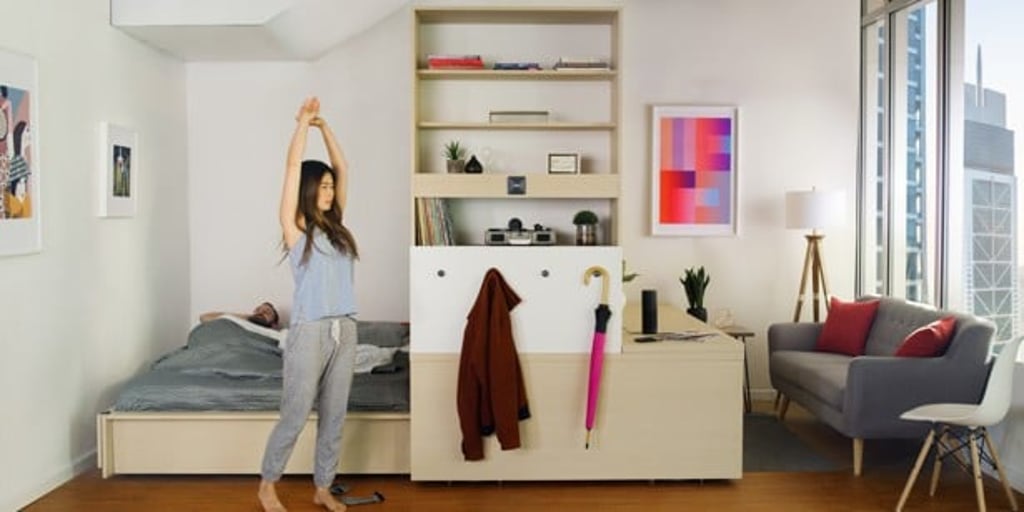
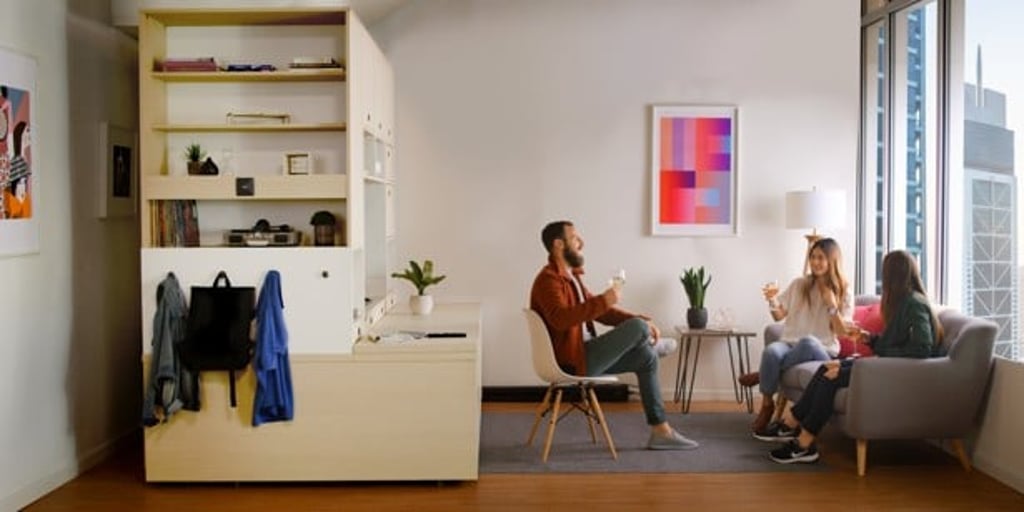
By physically transforming the flat’s interior to create the environment needed at the time, this system of robotic furniture, now in production in the US, “provides the experience of luxury living, without the luxury of size”, Behar says.
Ask Alexa to make my bedroom, and the system moves automatically to the preset location