Why parents seeking the best school should look at the decor, design and ergonomics
- A study has shown the link between well-designed schools and improved academic performance
- Architects and school boards are taking note, building well-lit, airy and sustainable school buildings

Parents in Hong Kong would probably do anything to boost their children’s academic success.
There are those hefty international school fees to justify, and/or the pressure of living in a society with an entrenched results-oriented culture. Which explains the tutors, the summer camps – anything to drive students to work harder.
But what if the school’s physical environment isn’t playing its part?
After a substantive study in Britain linked well-designed classrooms with improvement in academic performance, architects and school boards have taken note. Released in 2015, the study by University of Salford researchers found that differences in the physical characteristics of classrooms, such as air quality, colour and light, can collectively boost learning progress among primary school pupils by as much as 16 per cent in a single year.
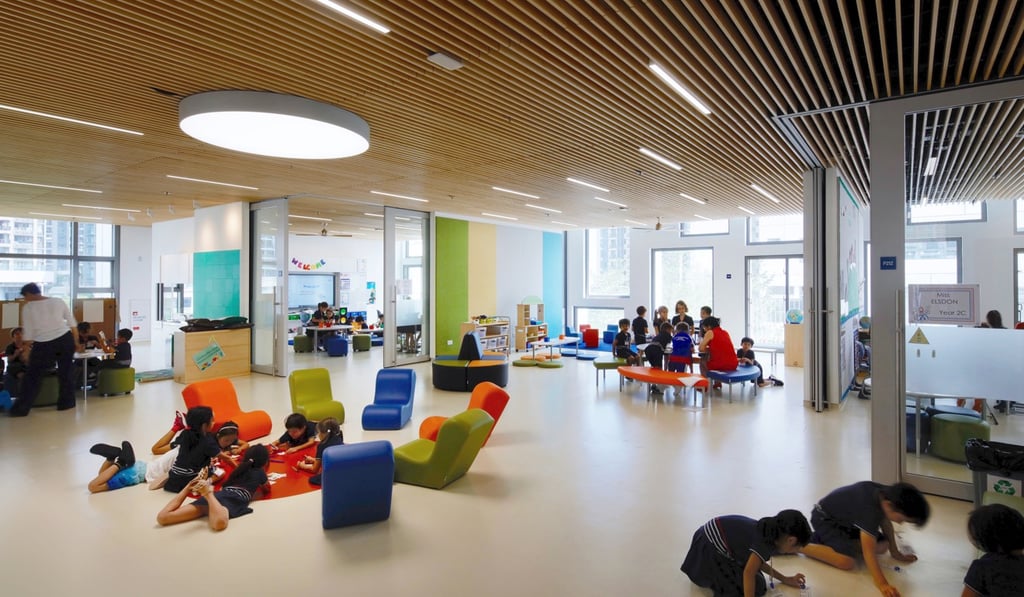
Claude Godefroy, lead architect of the new French International School campus in Tseung Kwan O, agrees that there is a strong connection between classroom design and academic performance.
“Architecture matters,” says Godefroy, design director and partner at Henning Larsen Hong Kong.