Videogame review: Middle-Earth: Shadow of Mordor, by Monolith
It had been a while since I last encountered Tarz Plague-Bringer. An obese, boil-covered uruk who had lost part of an eye in our last battle, he had been stubbornly persistent when it came to killing me: five times at my last count. Tarz had risen steadily through the ranks each time, from captain through to war chief.
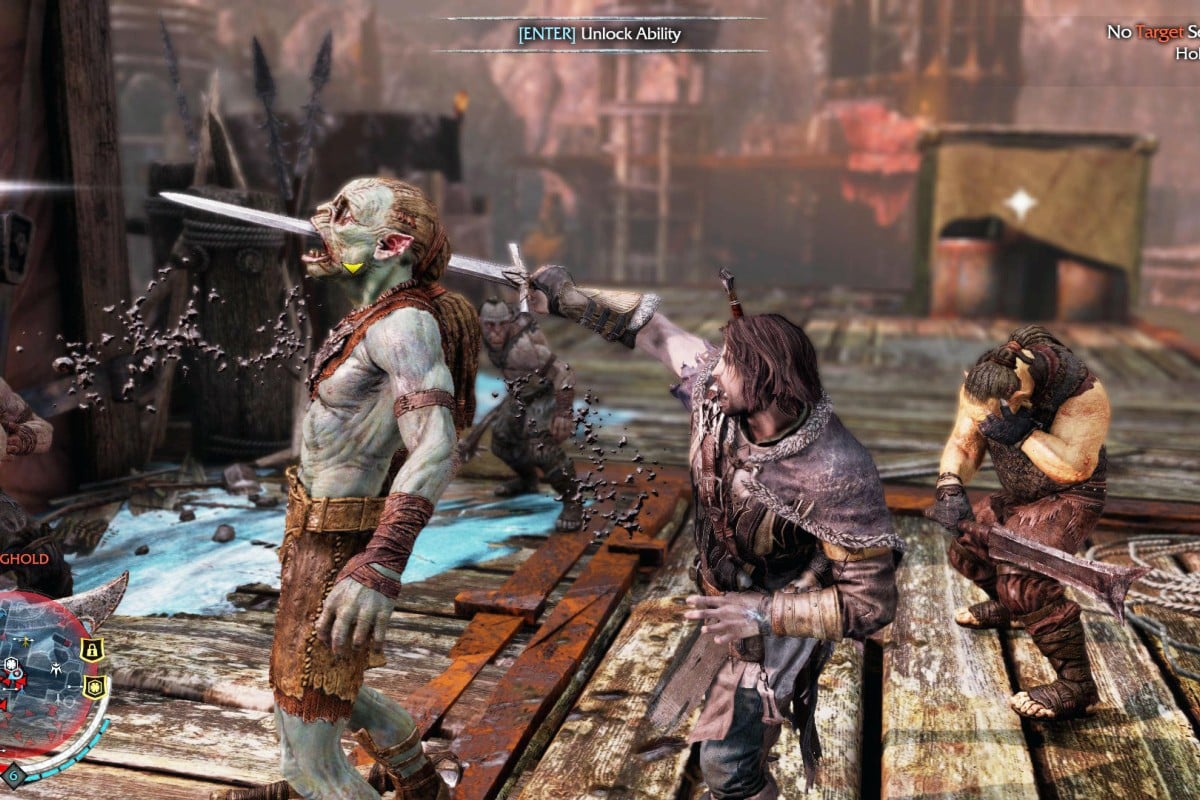
Monolith


But this time my strategy was foolproof: send one of my orcs undercover as a double-crossing bodyguard, ride in on my dominated caragor to target his fear of beasts, and then stage a full-on attack with my entire enslaved army. Simple, really.
There isn't anything particularly original in the story or basic gameplay of Middle-Earth: Shadow of Mordor. The quick, brutal combat is liberally borrowed from the Batman: Arkham series, while the parkour-like free-running movements across its open world are inspired by Assassin's Creed.
Gamers take on the role of a murdered Gondor ranger whose slain body is empowered with special abilities from an elven blacksmith's soul, and it's all set somewhere between J.R.R. Tolkien's Lord of the Rings books and the recent films.
None of that really matters, though, because Middle-Earth is only really concerned with your attempts to battle Mordor's armies. And what separates it from button-mashing games of similar ilk is its highly publicised "Nemesis" system.