Scientists now able to decipher ancient scroll buried and scorched by Pompeii eruption
Scientists have succeeded in reading parts of an ancient scroll that was buried in a volcanic eruption almost 2,000 years ago.
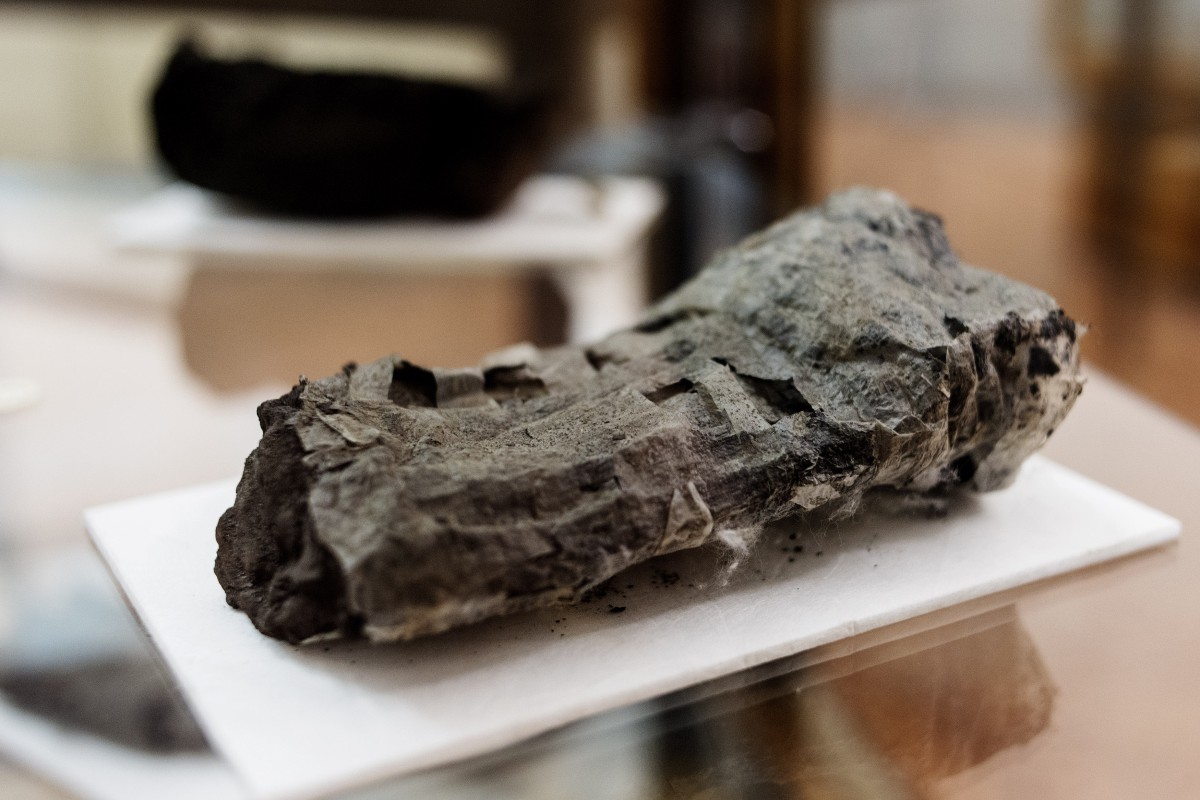
Scientists have succeeded in reading parts of an ancient scroll that was buried in a volcanic eruption almost 2,000 years ago, holding out the promise that the world’s oldest surviving library may one day reveal all of its secrets.
The scroll is among hundreds retrieved from the remains of a lavish villa at Herculaneum, which along with Pompeii was one of several Roman towns that were destroyed when Mount Vesuvius erupted in AD79.
Some of the texts from what is called the Villa of the Papyri have been deciphered since they were discovered in the 1750s. But many more remain a mystery to science because they were so badly damaged that unrolling the papyrus they were written on would have destroyed them completely.
“The papyri were completely covered in blazing-hot volcanic material,” said Vito Mocella, a theoretical scientist at the Institute of Microelectronics and Microsystems (CNR) in Naples who led the latest project.
Previous attempts to peer inside the scrolls failed to yield any readable texts because the ink used in ancient times was made from a mixture of charcoal and gum. This makes it indistinguishable from the burned papyrus.
Mocella and his colleagues decided to try a method called X-ray phase contrast tomography that had previously been used to examine fossils without damaging them.