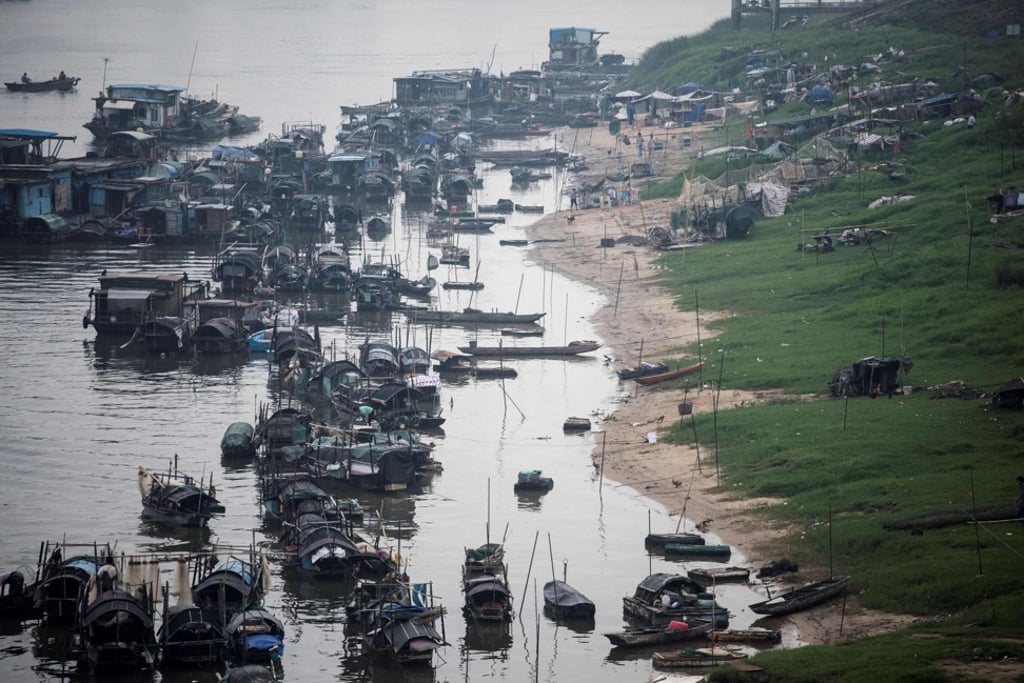
Ancient way of life ending for China’s boat-dwelling Tanka as younger generation give up fishing and come ashore
Two cultures are on a collision course as young Tanka in Guangdong forsake life on the water for better prospects ashore while older members of the fishing community stick to their traditional ways

Along southern China’s snaking rivers, an ancient fishing community that once lived and worked exclusively on the water has been finding its way to land.
Wooden fishing boats, wispy nets and bamboo steering poles are typical of the traditions of the Tanka – the term for generations of rural Chinese who have lived an aquatic existence.
They are not an ethnic minority, but rather so named for their unique customs and egg-shaped vessels (Tanka, or danjia, is homophonous to the Chinese word for egg).

In the town of Datang in Guangdong province, home to the country’s largest surviving Tanka population, this way of life risks evaporating as younger Tanka seek more prosperous opportunities on dry land, like the vast majority of the Tanka in Hong Kong.