Chinese Indonesians work to preserve 700 years of history in Lasem, a ‘Little China’ in Central Java
There was already a thriving Chinese community in Lasem when a captain of Chinese Admiral Zheng He arrived in 1413, and families still own homes built generations ago. As the young move away, preserving them becomes an urgent task

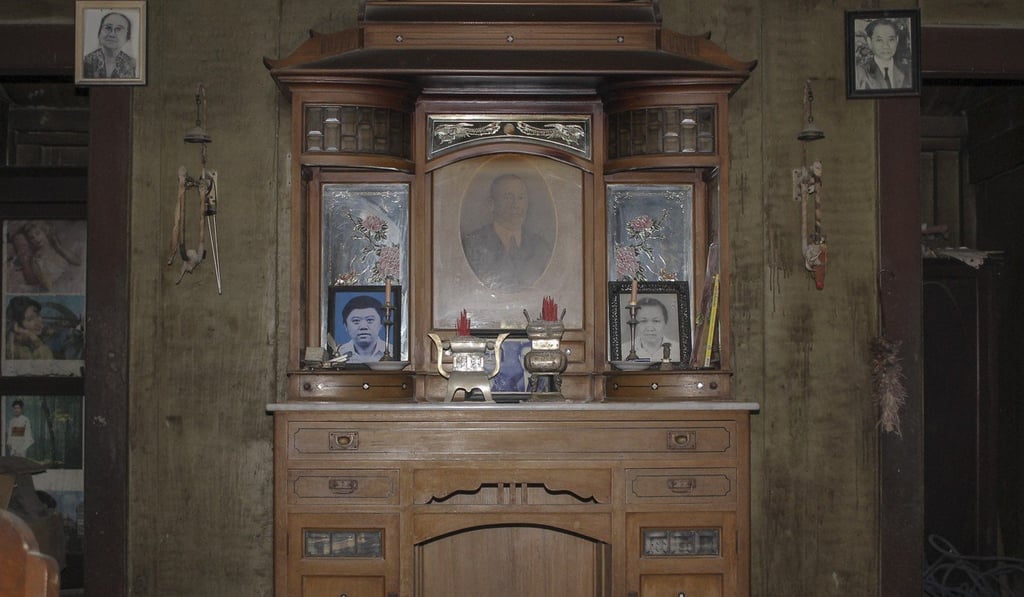
Frida Listiyani has remained in the house she shared with her husband, a ninth-generation Chinese Indonesian, since he died at the age of 74 a few years ago. She still prays for him and his ancestors at the altar in the home.
On every first and 15th day of each lunar month, she presents an offering of oranges to the Kitchen God. On the veranda hang portraits of her husband’s forebears, including his great-grandparents. She’s not sure which part of China they came from, but Frida – also known by her Chinese name, Tan Bwan Nio – says the house in Lasem, Central Java, remains more or less structurally unchanged since it was built by the first generation of her late husband’s family.
Lasem, a subdistrict about three hours’ drive from Semarang, the provincial capital of Central Java, was one of the earliest Chinese settlements on Java, Indonesia’s most populous island, and the many old homes and temples there serve as a reminder of its history.
Volume two of Chinese Epigraphic Materials in Indonesia, edited by the late German sinologist Wolfgang Franke and published in 1997, notes that: “The traveller who visits Lasem is struck by the fact that its centre still looks like a small traditional Chinese city [in] southern Fujian, hence its Malay name of Tiongkok Kecil, or ‘Little China’.”
The book notes that “The Peranakan, or local-born Chinese, of Lasem are known for the kind of language they speak, which is Javanese with an unusually large number of Hokkien terms.” Hokkien is a Chinese dialect widely spoken in Fujian province.