Chinese circus defends using rare animals in its acts despite poor crowds at shows and constant criticism of its methods
Circuses have a history going back more than 2,500 years in China, but the country also has some of the world’s laxest animal rights laws, and campaigners have long called for tougher regulations to be introduced

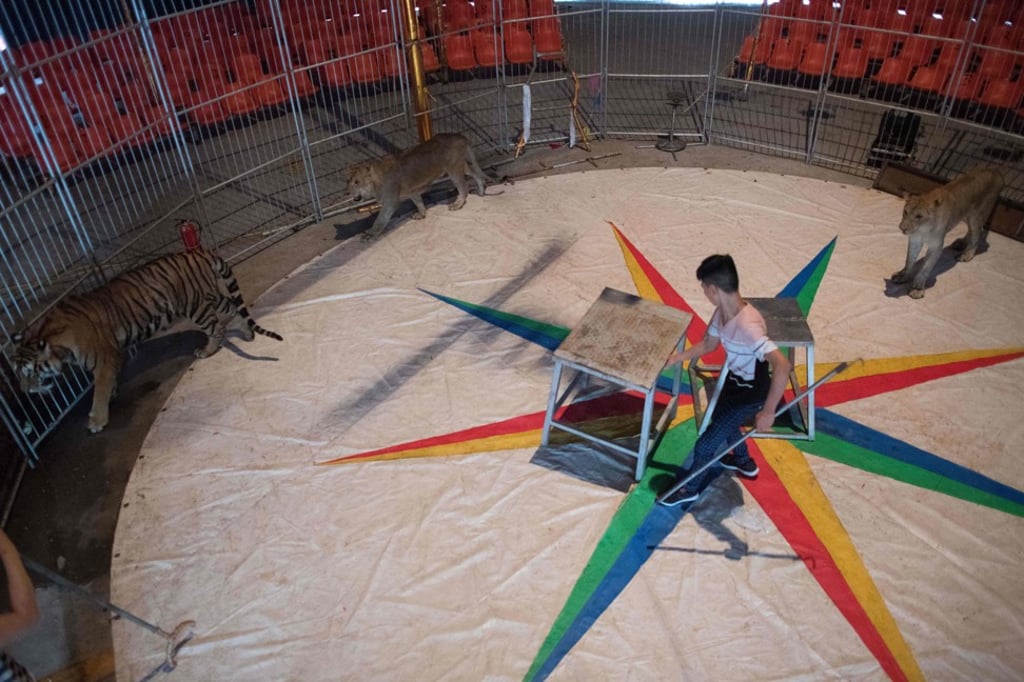
A crowd of just 10 people watch the endangered Siberian tiger roar on command on his hind legs and jump through hoops inside the big top of the Chinese Prosperous Nation Circus Troupe.
Lions and a young bear with a wound on its snout follow, performing tricks for the few who brave the sweltering heat in southern Guangdong province to help keep the travelling circus going for another day.
The use of wild animals in circus shows has come under growing criticism around the world, with some countries banning the practice, but for the Chinese troupe, the beasts are considered a major attraction.
“Many Chinese live in big cities where it’s hard to get out into the wilderness. We bring nature to them,” says Li Weisheng the troupe’s manager.
Circuses have a long history in China. Called “maxi” (pronounced “mah-shi”), and meaning “stunts on a horse”, they have a history going back more than 2,500 years and would often pair acrobatic performances with stunts on galloping horses.
The use of large cats, monkeys and bears is a more recent practice. China has some of the world’s laxest animal rights laws, and campaigners have long called for tougher regulations on the treatment of animals in travelling circuses.