Buddhist mountain temple in South Korea on Unesco World Heritage List is a pocket of tranquillity in a rapidly modernising land
Daeheungsa is one of seven South Korean temples that have recently been inscribed on Unesco’s World Heritage List. Matthew Crawford takes a trip to the country’s far south to explore this startlingly beautiful location

The air around me ripples with heat as I peer down at a brown wooden rectangle planted in the gravel of a massive, open-air courtyard bounded by a low stone wall. “The spectator / rolls up / does not come in,” it reads. I stand there for a while musing upon this Zen riddle, before realising that it means “no entry” to the monks’ quarters beyond.
I have travelled south from Seoul, soon after the birth of my first child, to tour one of the seven sansa – Buddhist mountain temples – that have recently been inscribed on Unesco’s World Heritage List. I’m hoping to soak up some serenity, and perhaps even find a spiritual signpost or two to point me forward along the path of fatherhood.
It is my last escape before the full duties of parenting set in, taken while my wife and child spend a short period of time in a sanhu joriwon, a South Korean facility designed to ease the transition to motherhood.
All seven temples are alluring: Tongdosa is said to contain relics of the Buddha himself; Bongjeongsa has one of the oldest wooden structures in the country; Buseoksa was founded by the pioneering monk Uisang; Beopjusa has a towering wooden pagoda; Magoksa harmonises stunningly with its natural surroundings; Seonamsa is the site of a famous stone bridge.
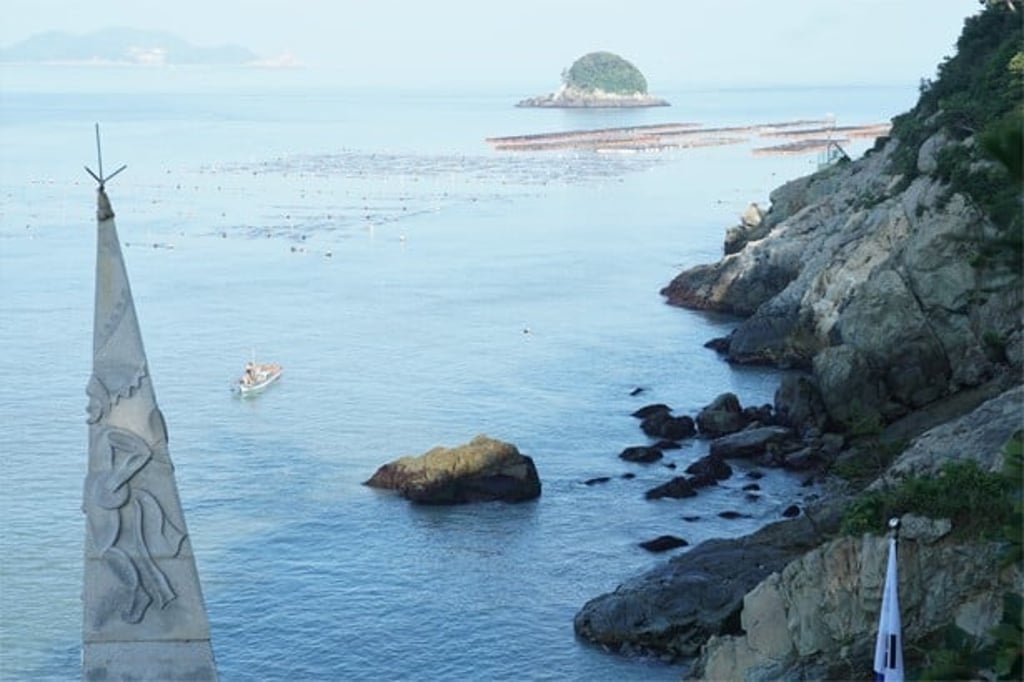
However, I’ve decided on Daeheungsa, possibly the oldest of the lot – one written source gives the founding date as AD426. It is also only 30km (18.6 miles) or so from Ttangkkeut, or “Land’s End”, the southernmost point of the Korean peninsula.