Hiking in Armenia: empty trails, snowy Caucasus peaks, historic sites, and surprises
- For those used to crowded trails, Armenia is a liberating experience
- The people are warm and the scenery stunning. But things can be unpredictable

My son, Marc, and I had tramped through shin-deep snow for several hours. By the time we reached the blustery top of the peak, we couldn’t see more than a few metres around us because of a whiteout.
Somewhere in front of us was a deep crater and the surrounding peaks of a volcanic rim we had hoped to reach. But as we stood on one of the highest peaks in Armenia’s Caucasus Mountains, we were satisfied we had made it this far.
For much of the last century, nobody would have considered the former Armenian Soviet Socialist Republic a hiking destination. But a few decades of independence and a strengthening democratic government have given the little nation a growing reputation as an interesting and safe place for hiking. We met hikers from France, England, Canada, Belgium and Australia in just a few days on the trails.
Smithsonian magazine earlier this year identified Armenia as one of the next world-class hiking destinations.
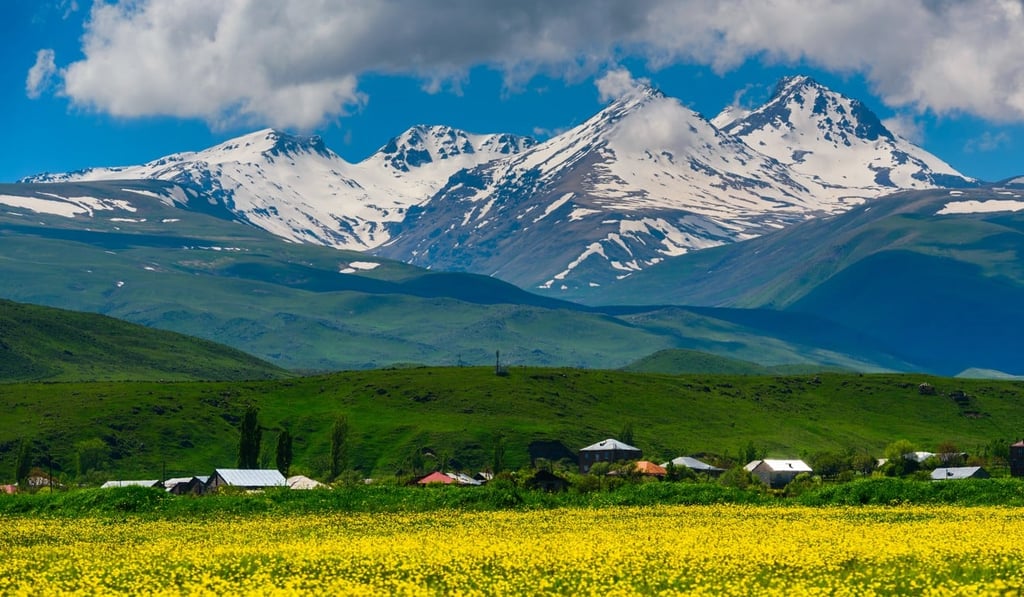
The nation’s beautifully wooded Dilijan National Park resembles America’s Great Smoky Mountains National Park. The plateaus of its volcanic Mount Aragats, 40 kilometres northwest from the capital Yerevan, look something like the high country in California’s Sierra Nevada, with barren igneous rock, gravelly slopes and snow-covered peaks.
Lake Sevan in eastern Armenia is twice as large as Lake Tahoe in the Sierra Nevada. Although its waters don’t have the clarity that makes Tahoe so spectacular, you won’t find a traffic jam around the lake’s perimeter or dense neighbourhoods of mansions.