Off the beaten track in Busan, Lonely Planet’s No 1 place in Asia to visit in 2018
- One minute you’re watching high rollers cruise past the Haeundae Beach casino, next minute you’re strolling an island where time’s stood still
- It’s easy to get away from it all in South Korea’s second city

“If your crops have been ravaged by water deer or wild boar, call this number,” reads a flier posted on the wall of a small waiting room for passengers. The bus I’ve arrived on lets out a hiss as the driver releases the brakes, then it circles a roundabout and lumbers uphill, back the way it came.
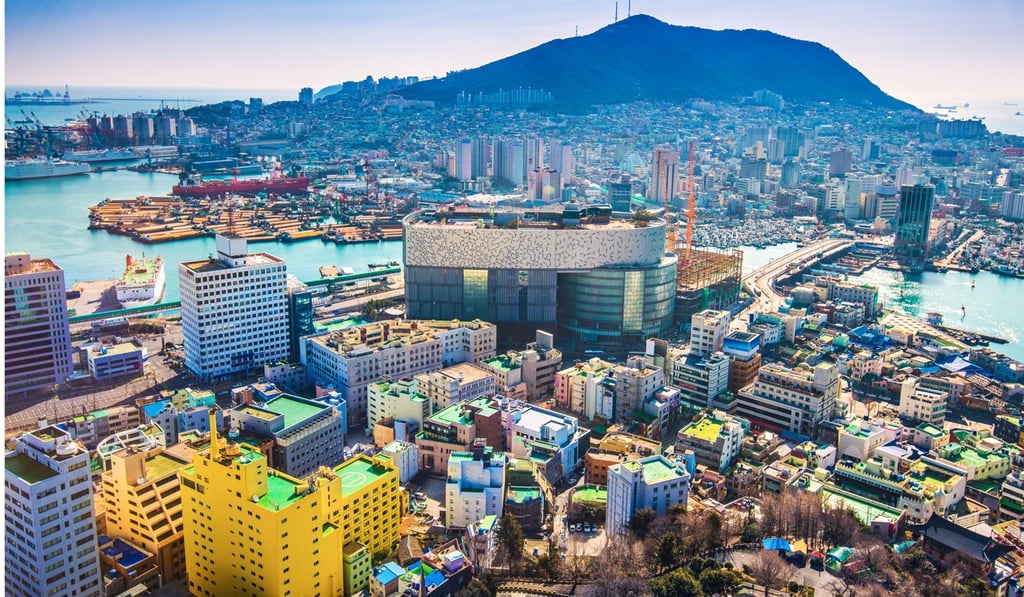
I’m in Busan, South Korea’s second city and Lonely Planet’s Best in Asia pick this year for its “stunning confluence of scenery, culture and cuisine”.
The scenery stands out as I walk up a quiet road with a slope smothered by kudzu vine on one side and a harbour town on the other, to a tunnel with a wildlife crossing over the top. Emerging from the other end, I can see a small village below. Black goats are bleating and fowl are clucking.
Busan may have the country’s busiest port, some of the most futuristic cityscapes in Asia, and night illuminations that turn the ocean into a spilled cocktail of neon and LED, but it also has some 380 kilometres of coastline, including dozens of rocky islets and islands.
At the western edge of the city limits is its largest island, Gadeokdo, where I have come this morning to catch some glimpses of the old Busan. The island has a population of less than 4,000, and a bridge connecting Gadeokdo to the mainland only opened in 2008.
Locally, Gadeokdo is known as “the island of history”. It’s the site of Cheonseongjin Fortress, where Korea’s most revered war hero, Yi Sun-sin, lived during the Japanese invasion of Korea in 1592. Also on the island is a granite dolmen dating back to the bronze age.