‘ I remember rubbish bins filled with human heads’: Hong Kong park’s grim wartime past
- Kowloon Park in Tsim Sha Tsui sits on the site of a military barracks, and the green space hides a past that included atrocities under Japanese occupation
- An underrated destination amid the urban jungle, its features include a swimming pool, aviary and maze, and majestic banyan and camphor trees

Millions of people pass through Kowloon Park in Hong Kong every year. And for good reason – it is one of the most robust green spaces in a part of the city that has very few of them, and it’s packed full of attractions.
There are no expansive lawns, but there is an Olympic-sized swimming pool, a maze, a rose garden, fountains and waterfalls, an aviary with 24 species of birds, a pond filled with flamingos, and a sculpture park with works by artists from Hong Kong, France, the UK and Indonesia.
It’s enough to keep anyone busy for an afternoon. But there is another attraction: a century of history hiding beneath the lush canopy of trees.
The Kowloon peninsula had only recently been ceded to the British crown when, in 1860, the British military laid claim to a bluff overlooking the harbour and the burgeoning neighbourhood of Tsim Sha Tsui. The first permanent installation came around 1880, when the Kowloon Battery was erected, part of a series of coastal defence installations meant to ward off maritime threats from the French and the Russians – two other European powers with their eyes on the Far East.
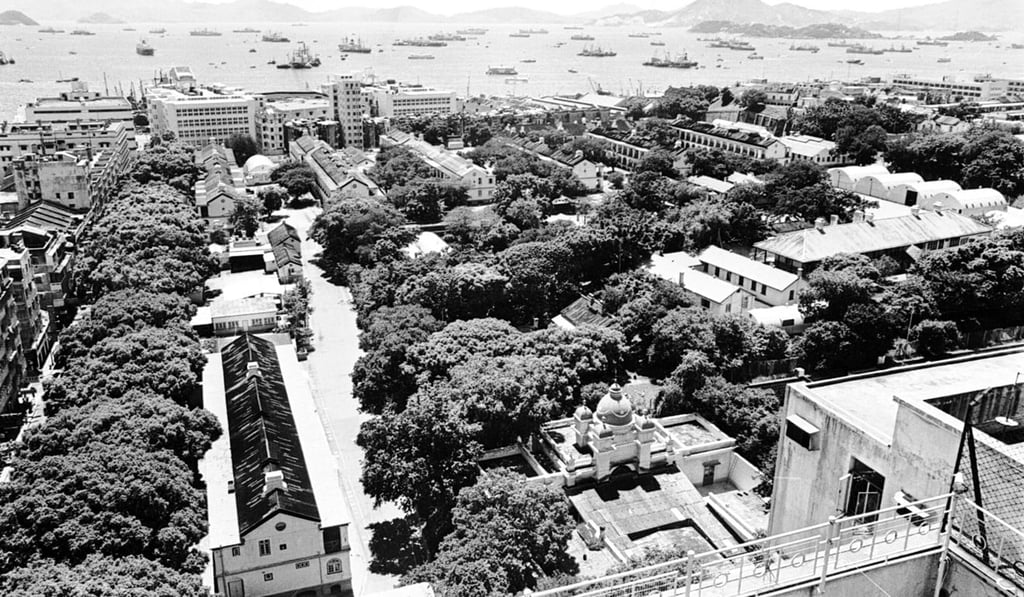
Construction of the battery was followed by that of the Whitfield Barracks in the 1890s. Named after Henry Wase Whitfield, commander of British troops in China, Hong Kong and the Straits Settlements, the barracks were home to Hong Kong’s Indian garrisons. The troops were housed in 25 whitewashed blocks with arched verandas and Chinese-style tiled roofs.