Thailand’s free-diving sea gypsies battle for survival after fire razes their village
- Ravaged by the 2004 tsunami, the Moken sea nomads have lost nearly everything again in a fire that has ripped through their settlement
- They fear it could happen again, as authorities rebuild the village in the same location using the same flammable materials

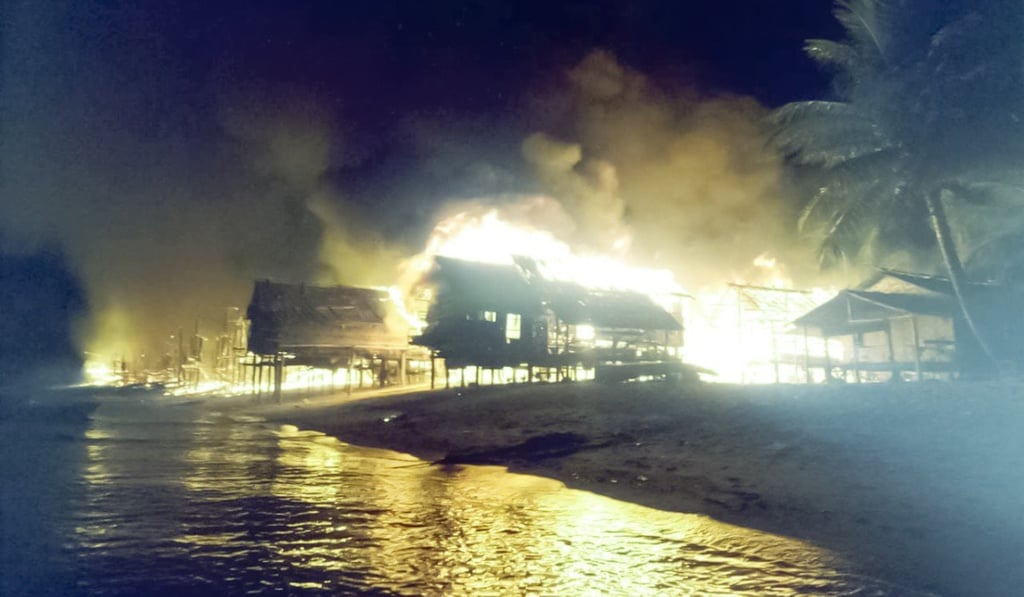
Where stilted huts once stood on the white sand, now there are just charred remains. “This is worse than after the tsunami,” says Hook, a Moken sea nomad surveying the damage fire has wreaked on his former village home on Thailand’s Surin Islands.
After the 2004 Indian Ocean tsunami destroyed the previous Moken settlement in Thailand’s Andaman Sea, Hook says, people were able to recover some belongings. This time, when fire broke out on February 3 this year, nothing was left.
Now the community fears for the future as the authorities begin to reconstruct the village in Au Bon Yai bay, in its original design, using an unsafe housing model consisting of highly flammable structures, densely packed together. And it has reignited a row about the Moken’s rights to their ancestral lands.
The Moken, skilful free divers, hunters and sea nomads, had always lived at sea, moving on to land only during the rainy season – until they were pushed ashore permanently some decades ago.
The Surin community of Moken made their home on the islands many generations ago. The Moken came to the world’s attention for their survival and heroism during the 2004 tsunami and now the village, located in a national park, attracts thousands of tourists.
The fire occurred just after sunset; the last of the tour groups had left. It had been hot for days and the huts, made from bamboo and palm leaves, were completely dried out.