New Statue of Liberty Museum in New York explores its history and impact on the world
- The museum on Liberty Island was conceived as a way to provide historical context to the millions of people who visit the monument each year
- It houses the statue’s original torch and other artefacts previously only accessible to a fraction of visitors

A newly opened museum at the Statue of Liberty gives visitors another opportunity to explore the history of the New York monument and the impact it has had on the world.
The 2,415 square metre (26,000 sq ft) museum on Liberty Island, which opened to the public on Thursday, houses the statue’s original torch and other artefacts which had previously been in a smaller museum space inside the statue’s pedestal, and which is accessible only to the fraction of the more than four million annual visitors who manage to get limited-availability tickets to enter the statue.
“We looked at this small museum and thought, wouldn’t it be wonderful to … move it out to a place where more people could experience it,” said John Piltzecker, National Park Service superintendent of the Statue of Liberty National Monument and Ellis Island in Upper New York Bay.
The new space, away from the entrance to the statue, is open to anyone who comes to Liberty Island, with admission included in the price of the ferry ticket. From the outside, the glass walls and copper-coloured roof appear to be rising out of the earth, with a giant staircase rising to a rooftop terrace at the centre.
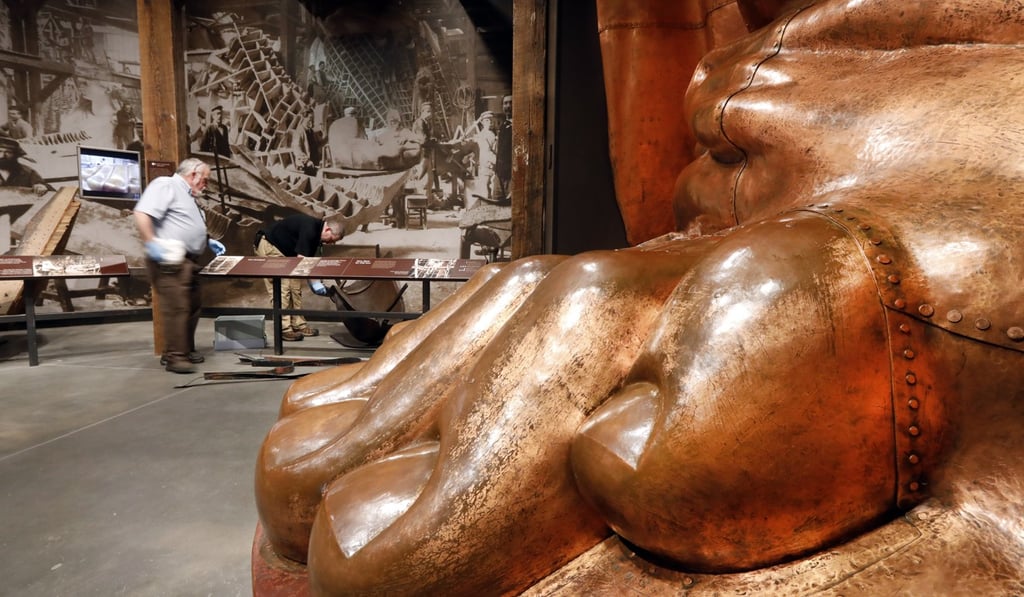
The entire structure is meant to connect to Lady Liberty, using the same granite that is part of the statue pedestal and including copper as a nod to the material the statue is made of, said Cameron Ringness, the project designer at FXCollaborative, which created the museum’s overall design.