How Hakka Chinese helped build Indonesia, overcoming exclusion and discrimination to serve the country
- The Indonesian Hakka Museum in Jakarta is a showcase of the contribution of the Hakka Chinese community to Indonesia over the centuries
- Acceptance and admiration of their efforts increased under president Susilo Bambang Yudhoyono, but recent years have seen discrimination returning

The large, round, earthen buildings favoured by Hakka Chinese can house dozens of people, sometimes hundreds, under the same roof. They are commonly found in the mountainous areas of Yongding district in China’s Fujian province, and tend to be fortified and enclosed within extremely thick exterior walls.
Tulou are rarely seen in a city as cosmopolitan as Indonesia’s capital, Jakarta. Yet the Indonesian Hakka Museum in the city’s east is housed in a type of tulou.
The museum aims to be a showcase for the contribution of the Hakka Chinese community to Indonesia. It is located in the Taman Mini Indonesia Indah, a cultural tourist park that features traditional Indonesian tribal houses from the nation’s 34 provinces as well as various museums.
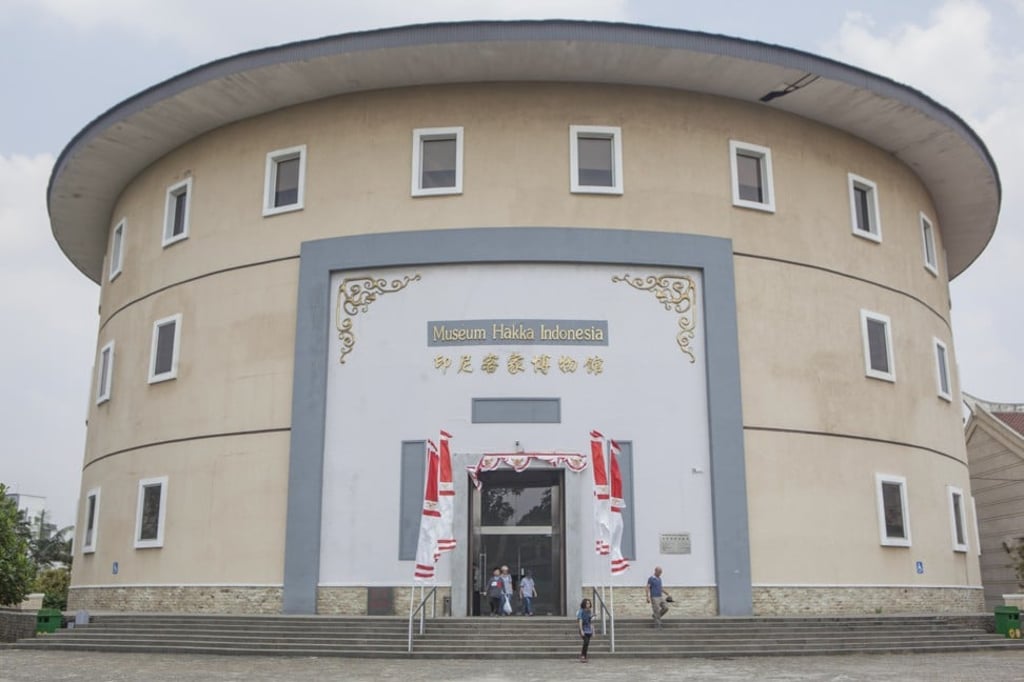
The Indonesian Hakka Museum, together with two other Chinese museums in the tulou – the Indonesian Chinese Museum and the Indonesian Yongding Hakka Museum – send the message that ethnic Chinese people have been a part of Indonesia for centuries, and are equal to Indonesia’s other tribes.
The museums are spread across the three storeys of the Jakarta tulou. A traditional tulou would also usually have three storeys. Livestock would be kept on the ground floor, while the floor above would be used for food storage. The highest floor would serve as living space.