‘A crime against culture’: Mongolian capital Ulan Bator set to demolish Soviet-era buildings – activists fight to save them and scent corruption
- The Victims of Political Persecution Memorial Museum has already been torn down, but the people of the city are hoping to save some other buildings
- They are urging the government to use the money that it has earmarked for demolition and reconstruction for renovation instead

On October 7, Mongolia’s Victims of Political Persecution Memorial Museum was demolished. The museum was housed in one of Ulan Bator’s oldest buildings, a small, brown wooden house in the centre of the city, which stood in contrast to the high-rises surrounding it.
The structure was once home to former Prime Minister Genden, who in 1937 was taken to Moscow, Russia, and executed for his refusal to comply with Joseph Stalin’s mandate to purge the country of its religious leaders, intellectuals, political dissidents, and ethnic minorities. With Genden out of the way, Stalin ordered the massacre of an estimated 20,000 to 35,000 Mongolians. Until last Monday, the museum told their stories.
As the parliament began its autumn legislative agenda, the government budget for the year revealed several line items financing the demolition of the city’s Natural History Museum, Opera and Ballet House, Drama Theatre, and Central Library. The Natural History Museum is expected to be demolished first, on October 30.
The buildings set for demolition are some of the city’s most beautiful.
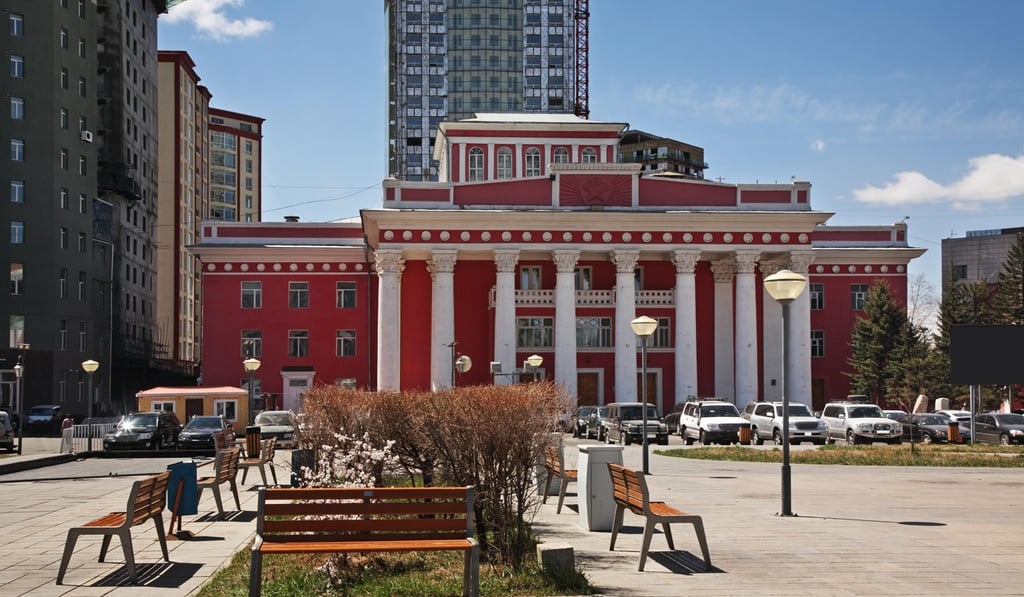
While recent years have brought the growth of high-rise developments and cement flat blocks, these endangered historic buildings have Grecian-style pillars set against ornate and brightly coloured facades. The interior of the Drama Theatre is filled with chandeliers, arched doorways, and elaborate floor tiling.
A night out to the ballet is also a treat – the beautiful interior and world-class performances draw tourists and residents alike.