Nature’s answer to rising sea levels – why the Maldives and other low-lying coral islands may not be doomed by climate change
- Recent research shows that low-lying coral islands rise naturally along with sea levels, as waves push sediment onto the land
- Sea walls that enclose islands may be doing more harm than good, by compromising their ability to adjust to rising sea levels

If you’re worried you are running out of time to take that dream holiday in the Maldives because the island nation is slipping beneath the waves, then read on.
In recent years, the leaders and inhabitants of many small island nations, such as Kiribati and Tuvalu, have warned that climate change is an existential threat to their homelands, fearing they could disappear under rising seas as the planet warms. But according to research published last week, small, low-lying islands dotted around the Pacific and the Caribbean – often seen as most vulnerable to global warming – can naturally adapt and raise themselves above encroaching waves.
“The dominant discourse is that of an island drowning, and the outcome of that is coastal defences and relocation … We think there are more trajectories for the islands,” said lead author Gerd Masselink, professor of coastal geomorphology at the University of Plymouth.
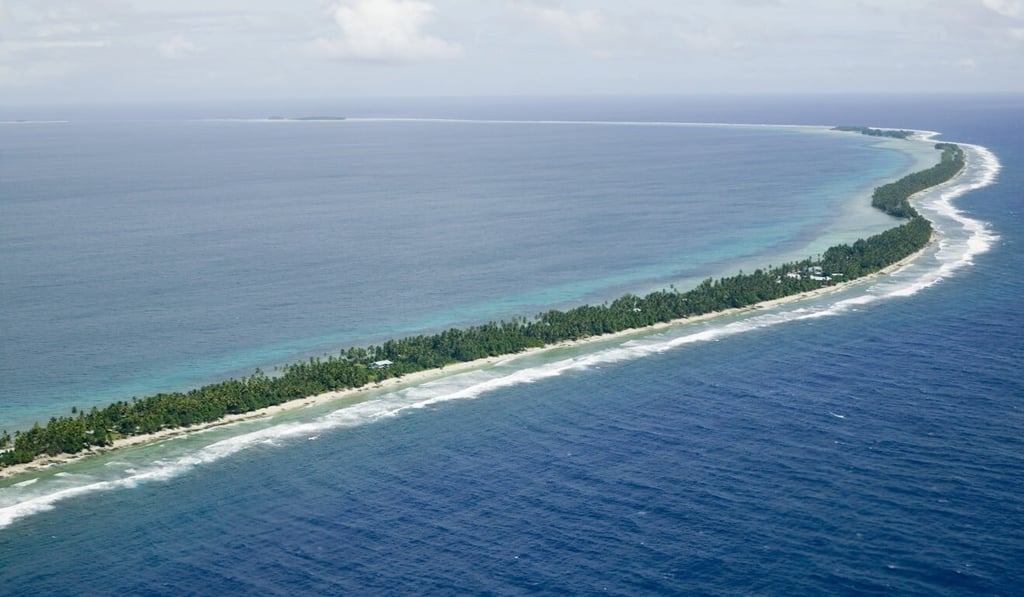
Low-lying island states are judged to be at greatest risk from increasingly powerful storms and rising oceans, with some making preparations to resettle their people within decades. Many are already building sea walls, moving coastal villages to higher ground, appealing for international aid or setting up projects to repair damage caused by the effects of climate breakdown.
The world’s tens of thousands of coral reef islands are mostly uninhabited, but those that are populated are home to about a million people, who largely rely on tourism or fishing for a living, said Masselink. Although the islands have different structures due to varying weather and wave patterns, they tend to be relatively small, low-lying, sandy or gravel islands sitting on top of a living reef platform.