Could swapping sex for sustainability save Bangkok’s tourist industry and other Thailand hotspots?
- Bangkok was the world’s most visited city for four consecutive years before 2020, when a ban on international travel decimated its tourist scene
- Now is the time for a more sustainable tourism model, focusing on quality tourists over quantity, one expert says

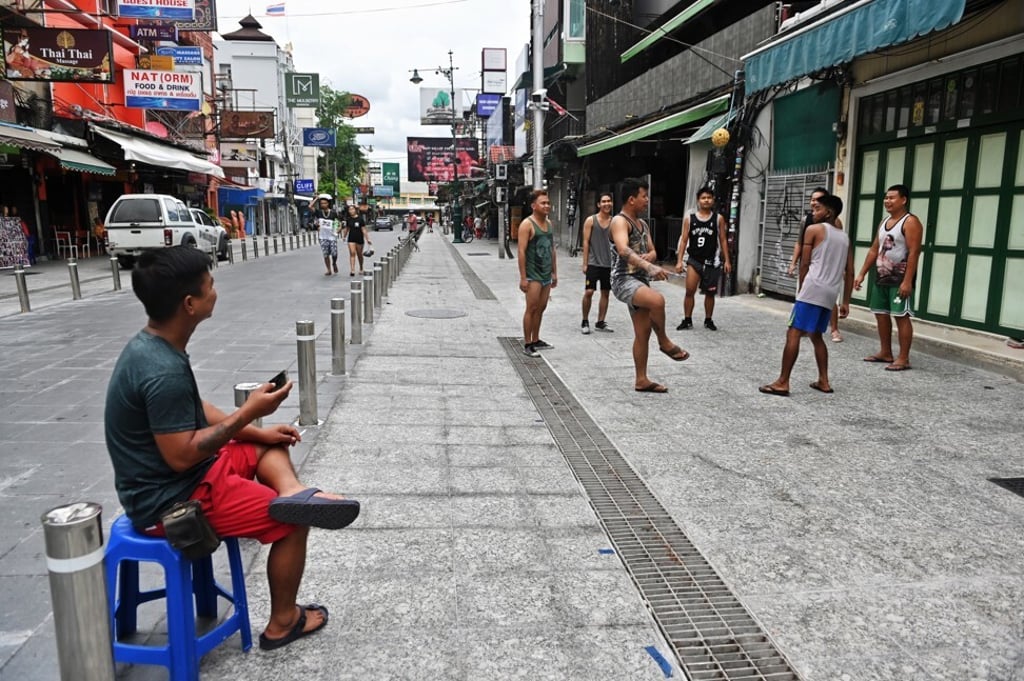
Bangkok tourist destination Khao San Road is usually heaving with people on weekends, its cheap beer bars, tattoo parlours, street vendors, hostels and buzzing nightlife drawing budget travellers and tour groups alike.
On a recent Saturday evening, the street was deserted except for a few dozen locals who wandered past boarded-up shops, ignoring restaurant staff calling out meal and drink deals. Khao San Road clearly shows the impact of the coronavirus pandemic on Bangkok, the world’s most visited city for four consecutive years before a ban on international travel.
“I have never seen it like this,” says a waitress who goes by the name Pookie. “Usually we don’t have time to stand for even a minute.
“Lots of businesses have shut here, and if we don’t see foreign tourists coming back soon, we may also shut. There are some locals coming on the weekends, but that’s not enough to keep us all going,” she says, pointing to the empty tables.
After a record 39.8 million foreign visitors last year, whose spending accounted to 11.4 per cent of gross domestic product, Thailand had looked to welcome more than 40 million tourists this year. But with flight bans and quarantines, its central bank expects only 8 million visitors this year.