‘It feels good’: India’s Taj Mahal palace reopens to tourists after six-month closure amid coronavirus crisis, even as cases in country continue to rise
- The monument, which normally attracts about seven million tourists a year, has reopened despite concerns about rising Covid-19 cases in India
- Visitor numbers are capped at 5,000 a day, and everyone must wear a mask and practice social distancing, but the first to come were happy to be there

India’s Taj Mahal reopened on Monday after being closed to tourists for more than six months due to the coronavirus pandemic.
With strict measures in place to prevent the spread of coronavirus, a maximum of 5,000 people per day are allowed to visit the historical monument, in Agra in the northern state of Uttar Pradesh. Visitors must have their temperatures checked, wear masks, practice social distancing and sanitise their hands, while entry tickets are being sold online rather than over the counter.
Aditya Diksha, one of the early visitors at the Taj, said he and his friends drove 12 hours from Central India and stopped in Agra on their way to the mountains in the north.
“It is the first time in six months we have been out, so it feels good,” he said. Workers at the Taj were sanitising the handrails while paramilitary police shouted at tourists not to touch any of the surfaces.
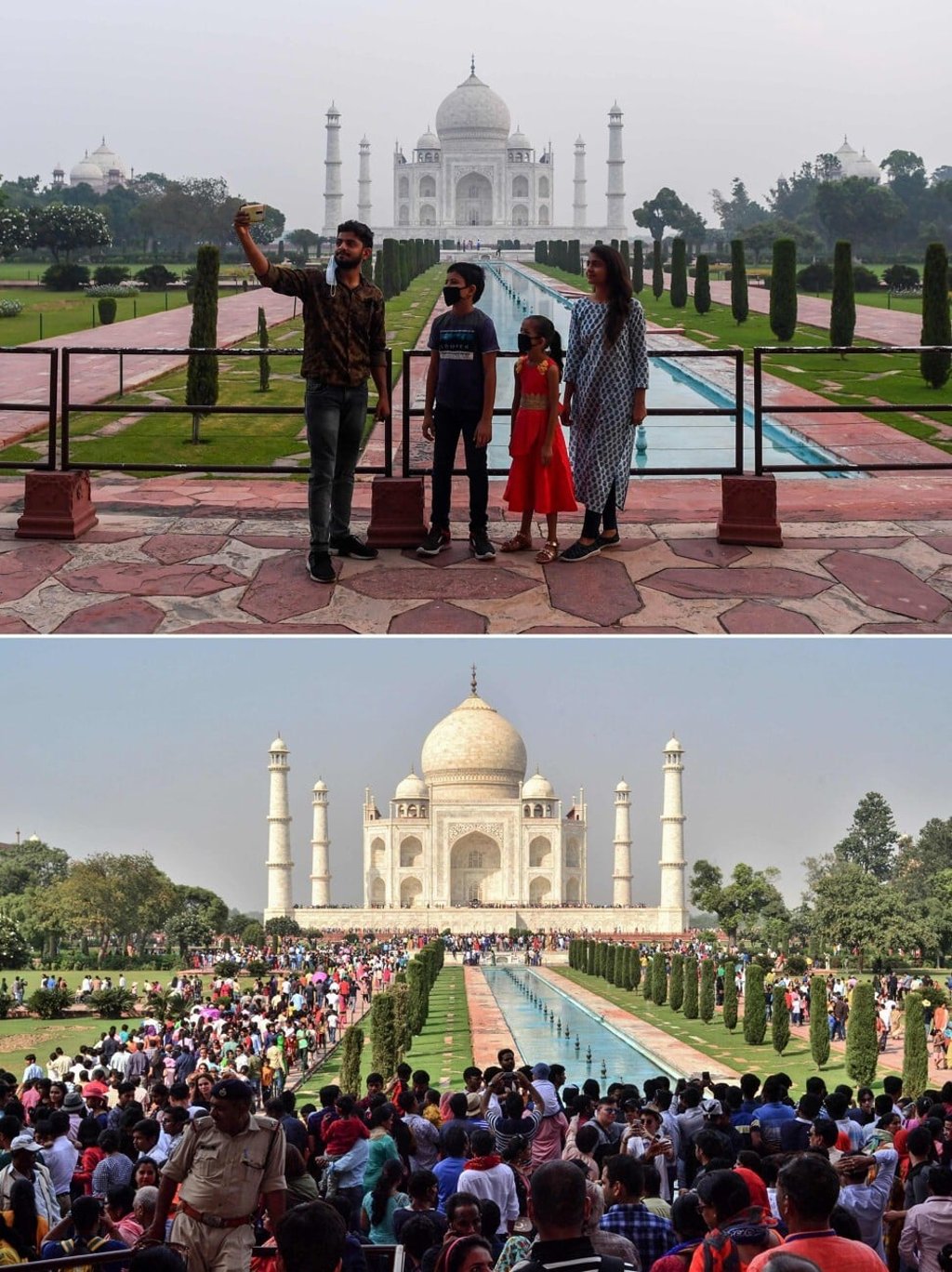
“We are following all Covid-19 protocols,” said Vasant Swarnkar, superintendent of the Archaeological Survey of India, which oversees the Taj among other monuments.