Memories in jars, letters saying sorry: why Indian museum dealing with conflict won an international award
- The Conflictorium is both a museum and a safe space in which people can discuss social, cultural and ideological conflicts, and work towards resolving tensions
- ‘It’s a constantly evolving space,’ says a frequent visitor to the museum, in a multi-faith quarter of the western Indian city of Ahmedabad

For a few days in 2002, when she was 12, Avni Sethi was forbidden from stepping out of the family home in Ahmedabad, India. From the terrace, she could see the city burning, struck by intercommunal violence that would claim at least 1,000 lives in the western Indian state of Gujarat.
The burning of a train in Godhra on February 27, 2002, which caused the deaths of 59 Hindu pilgrims returning from Ayodhya, where they campaigned for a Hindu temple to be built on the site of a mosque destroyed by Hindu activists 10 years earlier, is cited as having been the trigger for the violence.
Now a reality, the Conflictorium is more than a museum – it’s also a safe space in which people may discuss ideologies as well as conflicts, and work towards creative, community-led solutions to sources of tension. In today’s fractious world, the Conflictorium could serve as a template for others across the globe, and its value was recognised recently when Sethi was awarded the 2020-2022 Jane Lombard Prize for Art and Social Justice.
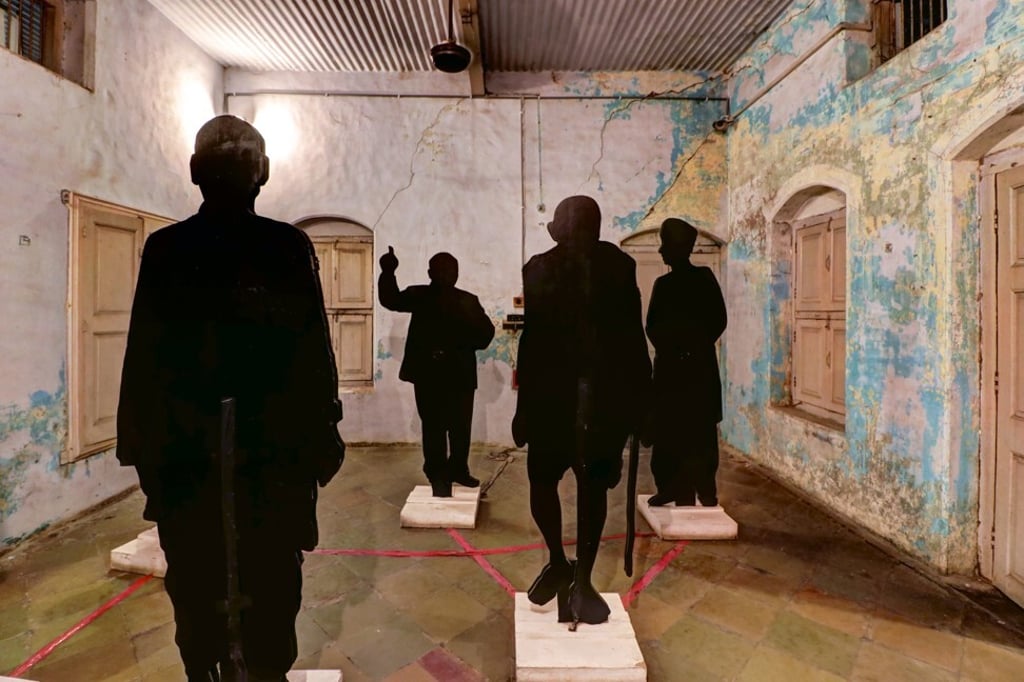
The museum is housed in a decrepit, 90-year-old building called Gool Lodge, in Mirzapur, the old walled part of Ahmedabad. Gool Lodge once belonged to the city’s first professionally trained hairstylist, Bachuben Nagarwala, who stated in her will that the building should be “used for something good” when she donated it to the Centre for Social Justice, a non-governmental organisation founded in India in 1993 to fight for the rights of marginalised people.