Mexico whale watching tours resume at half capacity, to the delight of visitors who can touch mothers nursing their calves in its warm waters
- Tourists elated to see up close grey whales that migrated south from the frigid waters off Alaska
- Boat operators are relieved to be taking visitors out on the water. ‘Everything’s getting better little by little,’ one says

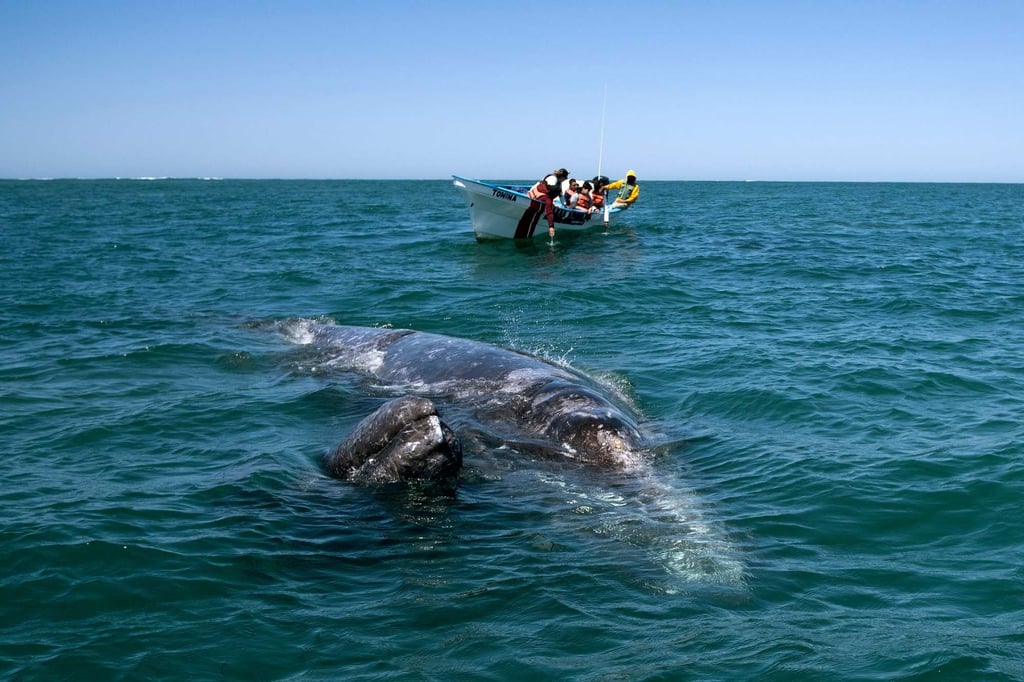
A giant, barnacle-encrusted grey whale nuzzles her calf next to a small boat of excited tourists in the waters off the Baja California peninsula in northwestern Mexico.
The annual arrival of the migratory mammals, coinciding with a drop in coronavirus infections, has provided a much-needed boost to the region’s battered tourism industry. For visitors, close encounters with one of the largest animals on the planet are a welcome respite from a pandemic that has killed more than 200,000 people in Mexico – the world’s third highest toll.
“It’s the best day of my life,” says Wilbert, a Mexican tourist who travelled from the southern state of Oaxaca to a coastal wildlife sanctuary in Baja California. “I had dreamed of whales before, so I was really keen to come.”
Each year, grey whales travel about 9,000km (5,500 miles) from their summer feeding grounds off Alaska to mate and give birth in the warmer waters off northwestern Mexico. Similar in size to a humpback whale but recognisable from their mottled grey colouring, they can be up to 15 metres (46 feet) and weigh as much as 35 tonnes (40 tons).
Mexico is one of the few major tourist destinations not to have closed its borders during the pandemic or demanded a negative Covid-19 test result from visitors on arrival. As a result, it was the third-most visited country in the world in 2020, after Italy and France. But it has still been a disastrous time for the tourism industry, and whale-watching tour operators were among those hit by a suspension of non-essential activities for part of last year.
Thanks to a decrease in coronavirus infections, the government allowed the boats to go out 30 per cent full at the start of this January-April season, which was later increased to 50 per cent.