Sex and nudity abound at erotic Pompeii exhibition, showing a different attitude towards the human body in ancient Rome
- Art and Sensuality in the House of Pompeii is a collection of erotic artworks gathered from the ruins of the ancient Roman city
- The statues and frescoes showing sex and nudity may be embarrassing for some viewers, but have been found all over Pompeii

Raunchy scenes may redden faces at a new exhibition in Pompeii on art and sexuality in the ancient Roman city, where sculptures and paintings of breasts and buttocks abound.
Archaeologists excavating the city, which was destroyed by the eruption of nearby Vesuvius in AD79, were initially startled to discover erotic images everywhere, from garden statues to ceiling frescoes. Since those first digs in the 18th century site, racy images have been found in taverns, thermal baths and private homes, from huge erect penises to a statue with both male and female physical attributes.
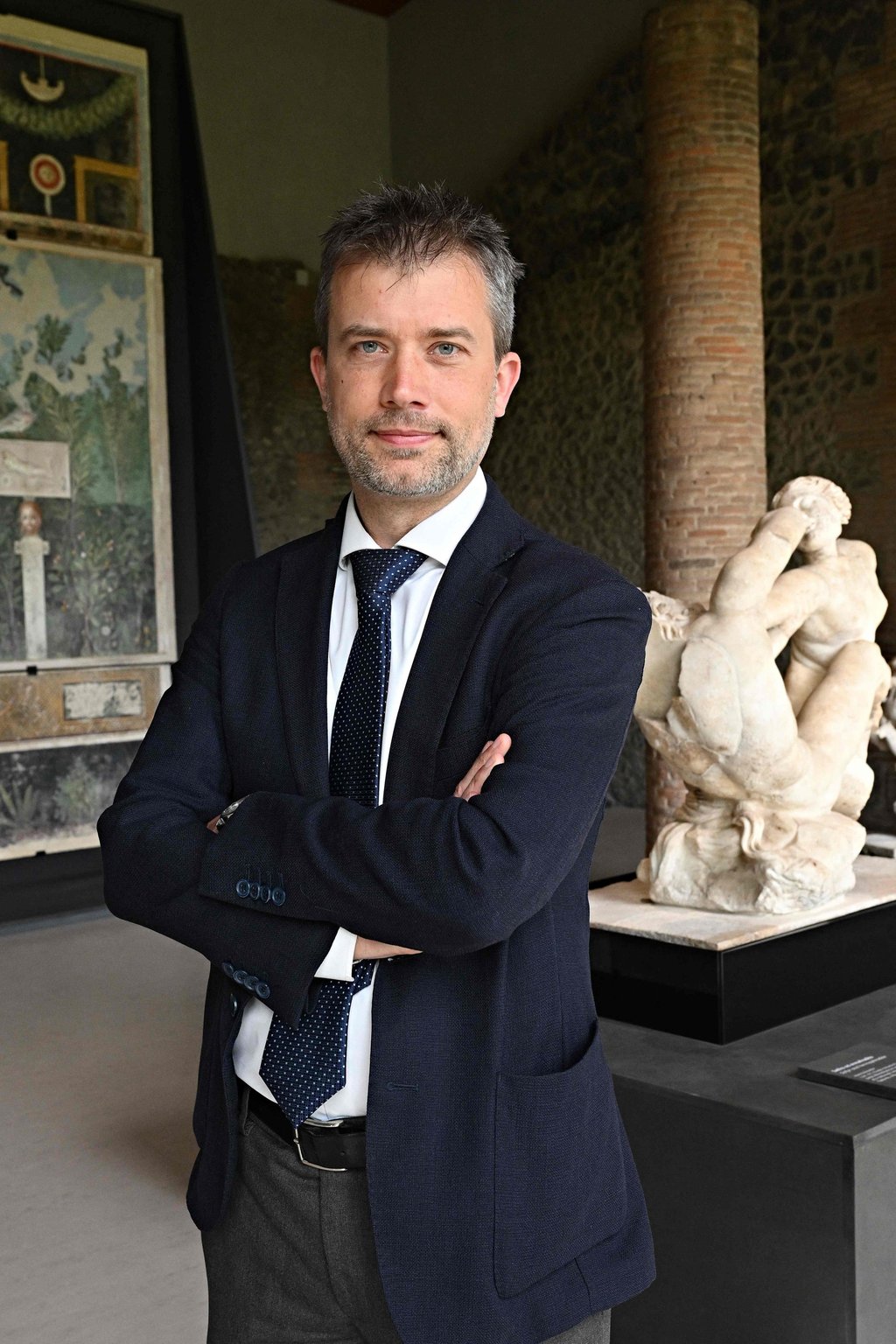
It became clear that “this is a city where sensuality, eroticism, are ever-present,” Pompeii’s site director Gabriel Zuchtriegel said, as he stood in front of statues of bare-chested centaurs. The discoveries initially caused “dismay, embarrassment and curiosity, and were seen by some as a great opportunity to think about the relationship with their bodies and nudity in a very different way”.
Neapolitan King Charles VII, who financed the excavations, shut some of the more bawdy finds away in a secret cabinet in Naples, showing them only to those of proven moral standing, Zuchtriegel said. That secret cabinet still exists in the archaeological museum in the southern Italian city.
The exhibition, which runs until January 2023 and comprises some 70 works, begins with the vast erect penis on a statue of the god Priape – a Roman symbol of fertility and prosperity. Priape, and his phallus, was traditionally placed in the atrium, the large central hall of Roman houses.
Visitors are told this has nothing to do with eroticism, “though the modern imagination gives it this meaning”, said Tiziana Rocco, of the Pompeii exhibition office. The smirking of embarrassed tourists is proof enough of that, despite some wishing it otherwise.