‘Pure chaos’: how whale shark tourism in Maldives is out of control and puts the magnificent creatures’ lives at risk
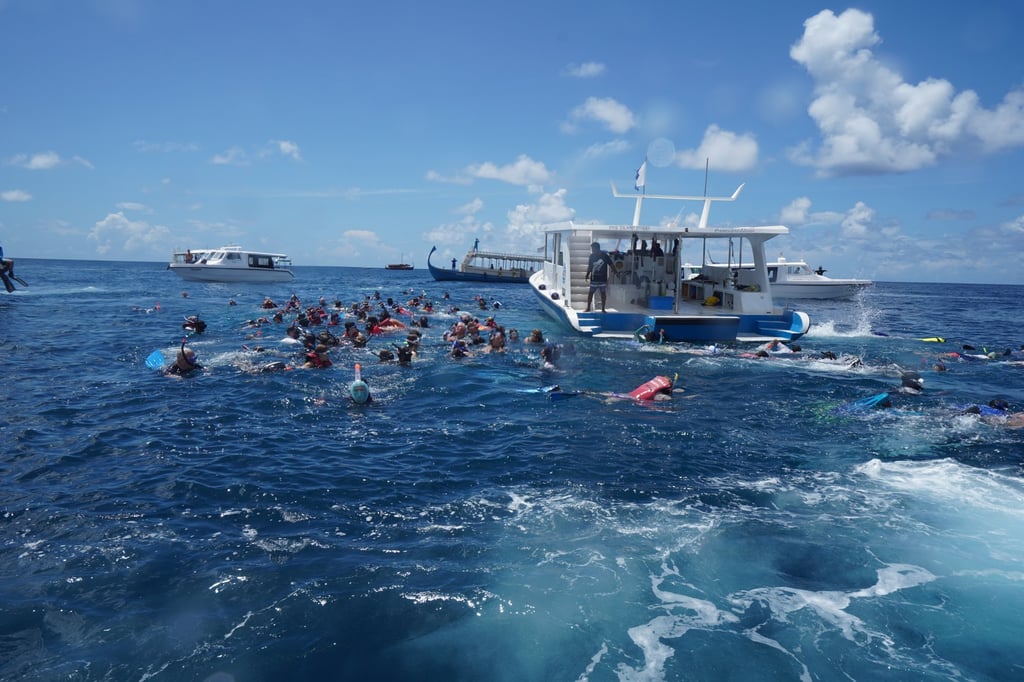
- Dozens of boats and hundreds of tourists can be in the water at a time chasing one shark. Nearly half of whale sharks in one area showed major injuries in 2019
- Enforcement can drive change, as Mexico has shown. If captains or guides break any rules, they risk a fine of up to US$13,000 and even up to nine years in jail

Swimmers move urgently through the warm, clear, turquoise waters. These are tourists on a mission – to photograph a whale shark, the world’s biggest fish. Surrounding the animal, they dive on top of one another, kicking each other’s fins.
The creature ignores the frenzy and continues to cruise through the shallow reef waters, searching for plankton to draw into his wide mouth. Finally, it finds a drop-off, and dives into the mysterious deep ocean waters. The crowd disperses and each swimmer returns to one of the dozen or so waiting tourist boats.
The scene is not uncommon in South Ari Atoll. The Maldives, particularly this atoll, is one of only a few locations known for year-round, all-weather whale shark sightings.
However, the animals are endangered, and their population is decreasing worldwide. Unregulated tourism poses a threat to their survival.
Whale sharks help balance the marine ecosystem. They feed on plankton and seaweed, the foundation of the ocean food chain.
The white-spotted creatures can grow up to 18 metres (60 feet) long, although it is rare to encounter one larger than 10 metres beyond the waters of the Galapagos Islands. Those seen in the Maldives are almost exclusively juvenile males.