Why making Japan’s cherry blossom forecasts is such a pressurised job, with trouble for those that get it wrong
- Each season, meteorologist Hiroki Ito predicts cherry blossom blooming dates for about 1,000 sites across Japan, but it’s a crowded industry
- Small and big businesses alike depend on the season for highly profitable marketing campaigns and promotions, making the forecasts closely scrutinised

As millions seek out prime locations to catch a glimpse of Japan’s famed cherry blossoms, or sakura, their enjoyment hinges on one of the most unusual forecasts in the world.
Each year, meteorologist Hiroki Ito predicts blooming dates for about a thousand sites across the island nation’s towns and cities. And he’s far from alone. A crowded industry has grown to cater for tourists and Japanese clamouring to get that perfect Instagram shot of the ephemeral pink petals.
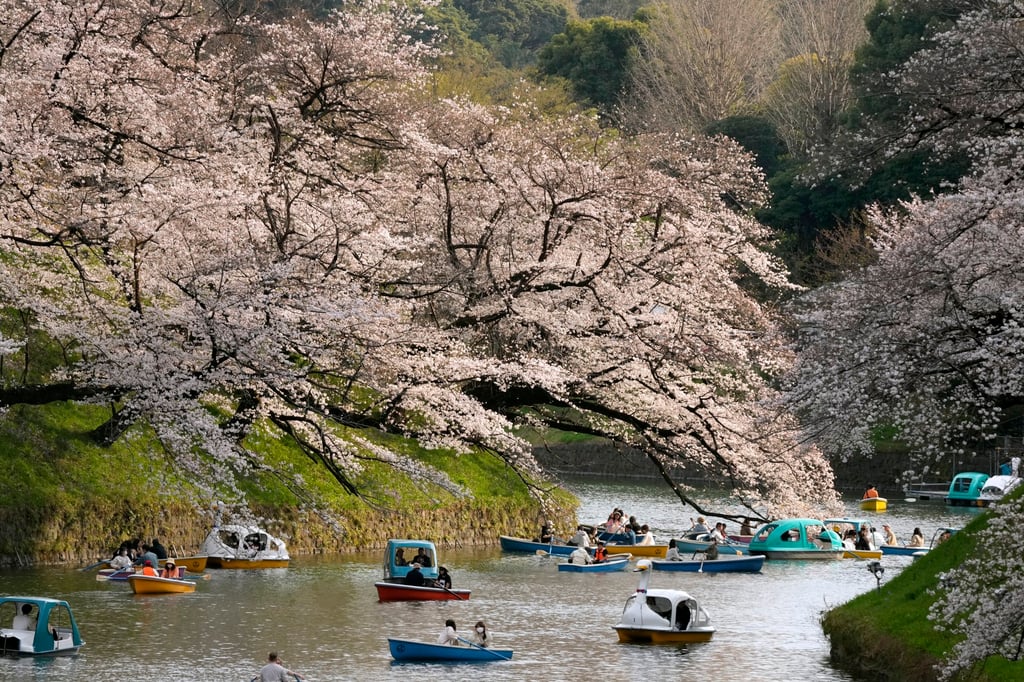
While the practice of viewing the blossoms – known as hanami in Japan – is a centuries-old tradition, it’s also good for business. Some 616 billion yen (US$4.7 billion) in economic activity will be generated in 2023, according to an estimate by Osaka’s Kansai University.
This year in particular, it’s thrown a lifeline to the country’s struggling tourism sector, which was ravaged by the Covid-19 pandemic.
That’s adding to the pressure on Ito, who is employed by, and makes predictions for, Osaka-based Japan Meteorological Corporation, one of the major private providers of cherry-blossom blooming data.