Advertisement
Why China’s electric vehicle future hinges on Hainan island, where sales of fossil-fuel cars will end by 2030
- With an extensive network of charging points and deployment of new battery tech, Hainan could help provide a blueprint for the rest of China to go all-electric
- The next challenge will be transitioning commercial vehicles to electric, where the cost savings aren’t as high as passenger cars
Reading Time:3 minutes
Why you can trust SCMP

Forget about “range anxiety” in Hainan.
With more than 75,000 charging points, electric vehicle (EV) owners in urban areas of the tropical island in southern China are usually no more than a mile or two away from somewhere to power up their cars.
The extensive network is part of a plan by the provincial government to end the sale of fossil-fuel cars by 2030 and have EVs and hybrids account for 45 per cent of the island’s fleet – the first and only place in China to set such a goal.
Advertisement
Its success could help provide a blueprint for the rest of the country to go all-electric.
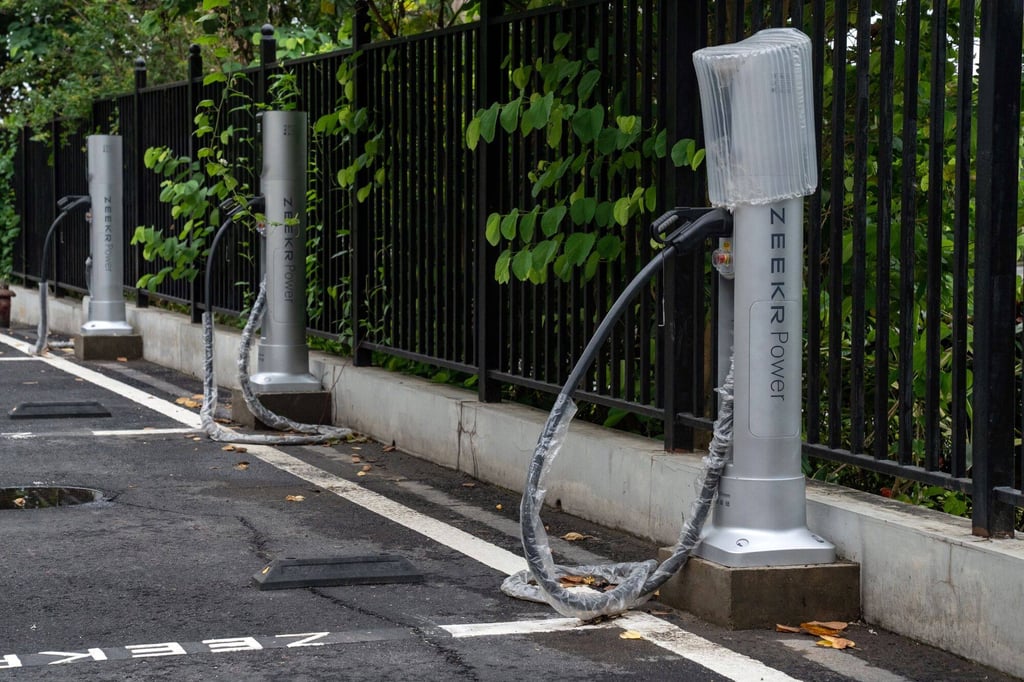
The island has certain advantages when it comes to supporting EVs.
Advertisement
Advertisement
Select Voice
Choose your listening speed
Get through articles 2x faster
1.25x
250 WPM
Slow
Average
Fast
1.25x